Xi and Steinmeier Call for Cooperation in Beijing — But Can Germany and China Bridge Their Trade Divide?
· News Team
BEIJING, October 30, 2026 — Germany and China used a presidential meeting in Beijing to call for international cooperation, but their appeals pointed to a difficult question: can the two economies agree on what a fair and stable international order should look like?
German President Frank-Walter Steinmeier met Chinese President Xi Jinping on Friday during a state visit scheduled for October 27–31. According to Reuters’ account of the meeting, Steinmeier emphasized the importance of a rules-based international system anchored in the United Nations Charter. Xi, meanwhile, promoted closer strategic cooperation and a more equitable system of global governance. The two messages overlap in their support for dialogue, but they do not by themselves settle disagreements about trade, security or the interpretation of international rules.
Why the meeting matters beyond the ceremony
Xi urged Germany to pursue a pragmatic relationship with Beijing and said China regards the European Union as a partner, Reuters separately reported on October 30. That language signals a desire to keep diplomatic and commercial channels open at a moment when European governments are debating how to reduce economic vulnerabilities without severing ties with China.
The challenge is not simply whether leaders favor cooperation. It is whether the terms of cooperation are reciprocal. In a speech at Peking University the previous day, Steinmeier warned that China’s push for economic self-reliance should not make other economies more dependent on Chinese production or critical inputs. He raised concerns about European companies’ market access, subsidized competition and raw-material export restrictions, according to Reuters’ October 29 report.
Shared vocabulary, different tests
Both governments have reasons to resist a breakdown in relations: Germany has major manufacturing and export interests, while China benefits from access to European markets and technology partnerships. Yet statements about openness become meaningful only when followed by specific policies. For Berlin and Brussels, measurable tests include market access, predictable rules for critical minerals and the treatment of industrial subsidies. For Beijing, the test is whether European governments can pursue their economic-security priorities while maintaining a functioning relationship.
That distinction also helps explain why the meeting should not be described as a new trade agreement or a breakthrough in any particular dispute. The publicly reported opening remarks established a diplomatic direction, not a signed settlement. Germany’s president also has a different executive role from its chancellor; presidential dialogue should not be confused with a completed change in EU trade policy.
Chancellor Friedrich Merz has pursued a complementary debate about diversifying economic ties in Asia. Tectonics previously examined his proposal for closer EU–Pacific trade cooperation, which remains a proposal rather than an implemented pact.
What to watch next
Three developments would make this meeting more consequential: a concrete mechanism to address European market-access complaints, clearer treatment of export restrictions affecting industrial supply chains, and evidence of sustained cooperation on international security. Until then, the clearest result is continued high-level engagement despite substantial differences.
Reporting note: This analysis distinguishes leaders’ reported positions from independently confirmed policy changes. The meeting and visit dates are supported by China’s foreign ministry visit announcement and Reuters reporting dated October 29–30. No authorized, event-specific YouTube video with independently validated upload date and embedding permission was confirmed at publication; none has been embedded.
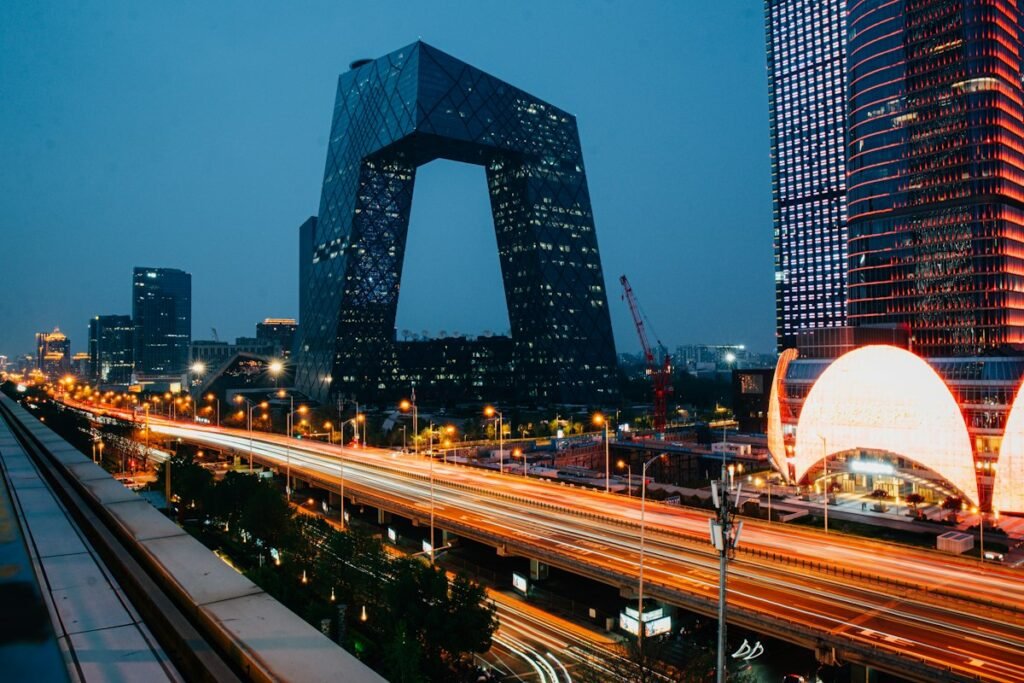
Featured image: Illustrative view of Beijing, not the presidential meeting. Photograph by Christian Lue / Unsplash.


About The Author





Leave a Reply