Ryanair’s 15% Profit Drop Raises a Bigger Question: How Much Will European Airfares Rise?
· News Team
November 2, 2026 — Europe’s largest low-cost airline is carrying more passengers but earning less from each seat. Ryanair reported a 15% decline in profit after tax for the six months to September, to €2.15 billion, even as passenger traffic climbed 6% to 125.8 million. Its latest results expose a tension that matters beyond one airline: cheap tickets can attract travellers while higher fuel costs squeeze the business behind them.
Average fares in the first half fell 4% to €55.70. Revenue nevertheless rose 3% to €10.08 billion, while operating costs jumped 10% to €7.69 billion. In the July–September quarter alone, profit fell 6% to €1.61 billion. These are different reporting periods: the 15% drop covers the half-year, not the quarter.
Why fuel hedging matters to future fares
Ryanair said the price of its unhedged jet fuel doubled, while roughly 80% of fuel requirements for its financial year ending March 2027 were locked in at about $67 a barrel. For the following year, however, only 25% had been hedged at approximately $95. That leaves more exposure to future market prices as existing protection expires.
The airline estimates that its fuel bill for the year ending March 2028 could rise by around €2 billion at current forward prices. Chief executive Michael O’Leary has warned that European short-haul fares may need to rise substantially, potentially by double-digit percentages, but this is a forecast and risk scenario, not an announced ticket-price increase. Reuters reported that a rise of roughly 20% might be needed to offset the fuel shock fully, with the company uncertain that the market could bear it.
What travellers and employees should watch
Ryanair is examining airport arrangements, staffing costs and additional use of artificial intelligence in administrative operations. The company has floated the possibility of temporary pay freezes as labour agreements mature. These are options under review, not confirmed cuts to every worker’s pay or crew complement.
For passengers, the most important variables are the cost of fuel after hedges expire, airline capacity and how close to departure people book. Ryanair says demand remains strong but late bookings reduce its visibility. The carrier has lowered its financial-year passenger target to 214 million and is planning more than 220 million for the following year, subject to aircraft deliveries and operating conditions.
The bigger picture: A 6% traffic gain alongside a 15% profit decline shows why passenger growth is not the same as financial resilience. Lower fares today may coexist with a more expensive travel market next year if fuel prices stay elevated. Neither outcome is guaranteed.
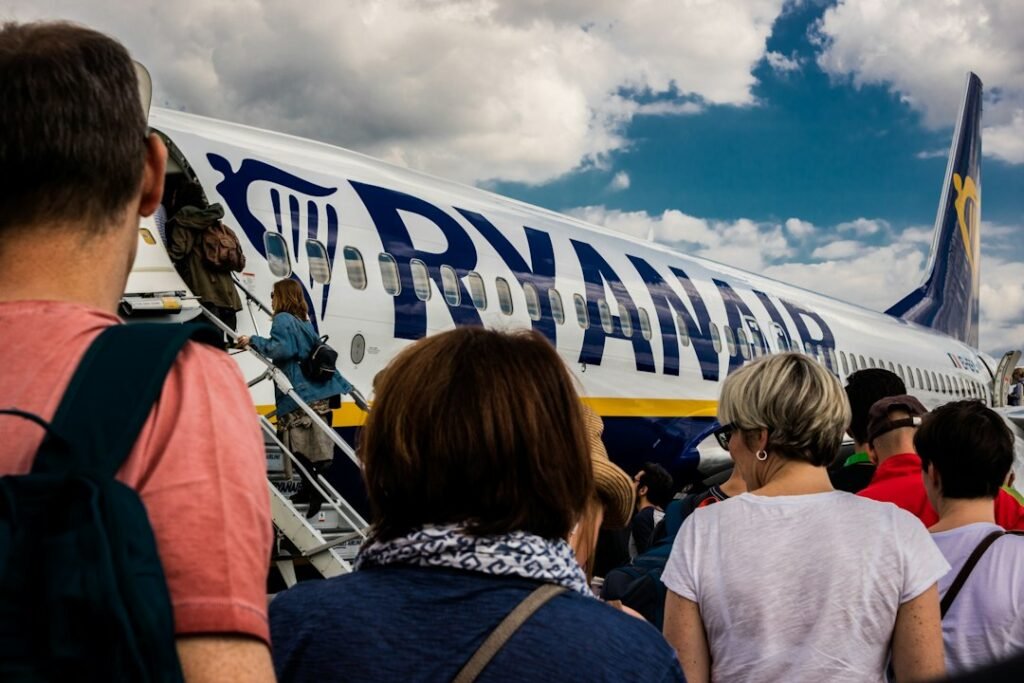
Illustrative photograph: passengers boarding a Ryanair aircraft. Photo by Portuguese Gravity / Unsplash; not a photograph of the November 2 earnings announcement.
Sources
Ryanair: H1 FY27 financial results, November 2, 2026; Reuters: Ryanair’s fuel-cost and fare outlook, November 2, 2026; Associated Press: European airfare outlook, November 2, 2026.


About The Author





Leave a Reply