RWE and KKR Secure £12 Billion for UK Offshore Wind — What Happens Before the Power Flows
· News Team
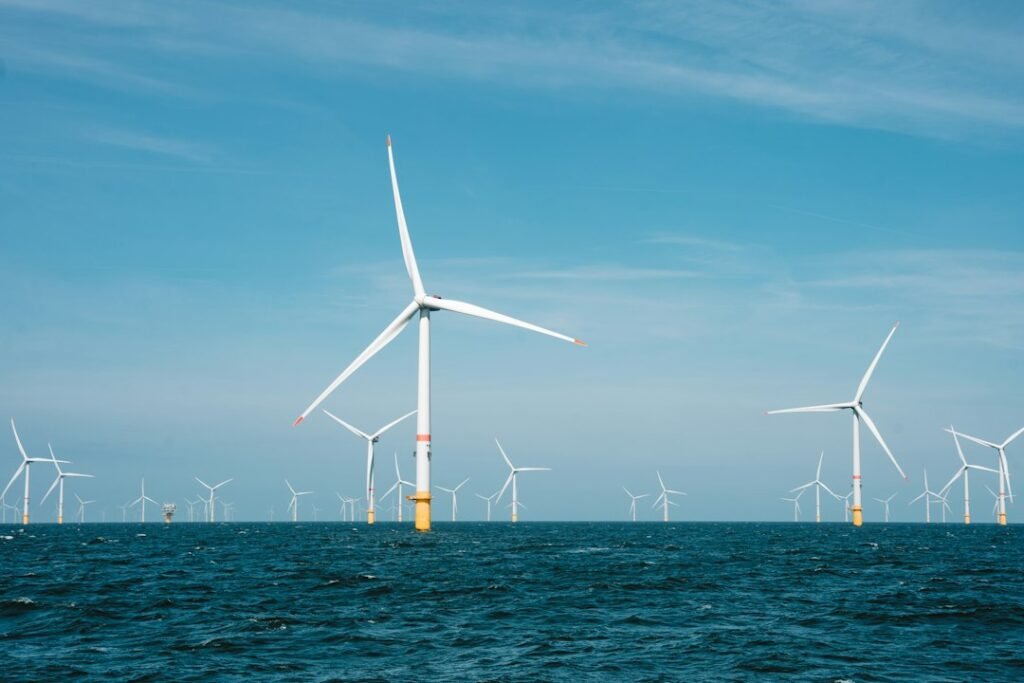
Two of Britain’s largest planned offshore wind farms have secured financing, moving a major clean-power investment from agreement toward construction — but not yet toward electricity production.
On 11 November 2026, German energy group RWE and investment firm KKR announced financial close for Vanguard East and Vanguard West, projects off the Norfolk coast with a combined planned capacity of 2.8 gigawatts. Their roughly £12 billion investment covers the wind farms and associated transmission infrastructure. KKR has completed its acquisition of a 50% equity stake in each project, forming an equal joint venture with RWE.
What financial close actually means
The milestone means financing arrangements have been secured; it does not mean turbines are already generating electricity. RWE says a group of 35 banks is providing £11.1 billion in cash facilities and £1.7 billion in ancillary facilities, alongside equity from the partners. These financing facilities should not simply be added to the £12 billion investment figure as though they were separate project spending. The UK’s National Wealth Fund has committed £1 billion as part of the financing package.
Preparatory onshore works are under way. Offshore construction is scheduled to begin in early 2027, with both projects targeted for full commissioning in 2030. Each wind farm is designed for 1.4 GW; RWE estimates their combined output could be equivalent to the electricity needs of approximately three million UK homes once operational. That is a capacity-based comparison, not a guarantee of continuous output.
Why the investment matters
For Britain, the projects represent a substantial commitment to domestic electricity supply and a test of whether large offshore installations can attract long-term private capital despite high construction costs. For lenders, the financing demonstrates appetite for projects backed by long-duration revenue arrangements. Both wind farms received 20-year inflation-indexed Contracts for Difference at £91.20 per megawatt-hour in 2024 prices in the UK’s seventh allocation round, according to RWE.
Those contracts can reduce revenue uncertainty for developers, but they do not eliminate construction risk or automatically establish that household bills will fall. Turbine installation, grid connection, supply-chain capacity, weather and financing costs all affect the final economics. The most important next checkpoints are the start of offshore foundation work in 2027, construction progress and eventual commissioning.
What to watch next
RWE will lead delivery for the joint venture. Investors and policymakers should watch whether offshore work begins on schedule and whether transmission infrastructure is ready when generation starts. The announcement is a consequential financing milestone; claims about delivered clean electricity and consumer savings will require evidence after construction.
Image: Illustrative offshore turbines in the Belgian North Sea, not the Vanguard construction sites. Photograph by Jesse De Meulenaere / Unsplash.
Sources
RWE: financial close and project details, 11 November 2026; Reuters: RWE and KKR investment report, 11 November 2026; RWE: turbine supply agreement, 10 March 2026.


About The Author





Leave a Reply