Merz Demands Shared EU Funding for Ukraine—But the 2027 Gap and Next Budget Are Different Battles
· News Team
BRUSSELS, November 11, 2026 — A dispute over who should finance Ukraine is becoming a test of the European Union’s next long-term budget. German Chancellor Friedrich Merz has urged every EU member state to contribute, according to reporting published on November 10, while several governments oppose taking on additional obligations. The disagreement matters because Kyiv’s immediate financing needs and the bloc’s seven-year spending plan are related—but not interchangeable.
What Merz is demanding
Reuters reported that Merz wants Ukraine support incorporated into the EU’s budget discussions and argues that the burden should be shared across member states. Reuters cited an estimated €70 billion Ukrainian financing gap in 2027 and an expected €45 billion EU contribution. These are reported financing estimates and political positions, not evidence that a new package has already been approved.
Slovakia’s Robert Fico criticized the pressure as blackmail, while other governments have questioned whether participation in future support should be compulsory. The disagreement reflects a wider budget negotiation over national contributions, defense spending and competitiveness. Reuters’ November 10 reporting and The Guardian’s account document the dispute.
Two different funding clocks
The European Commission’s existing Ukraine Facility provides a framework of up to €50 billion for 2024–2027. Separately, its proposed 2028–2034 EU budget includes the possibility of mobilizing up to €100 billion for Ukraine over seven years. That €100 billion is a proposal subject to negotiation, not a disbursement already made or a solution automatically available for the 2027 gap.
This distinction is central to the political argument: a long-term commitment can improve predictability, but it does not by itself close next year’s cash-flow shortfall. Conversely, an emergency bridge package would not settle the question of how the EU distributes Ukraine-related costs across its next budget cycle.
Why the dispute matters
For Ukraine, predictable external funding helps keep public services and essential functions operating during war. For EU governments, the issue is how to balance that support with domestic spending priorities and the legal and political rules governing common borrowing and budget approval. A deadlock could delay decisions even if a broad majority supports continued assistance.
The immediate questions are whether leaders can agree on a 2027 financing mechanism, how any exemptions are handled, and whether the 2028–2034 proposal survives negotiations in its current form. No final agreement on those questions was established by the sources available at publication.
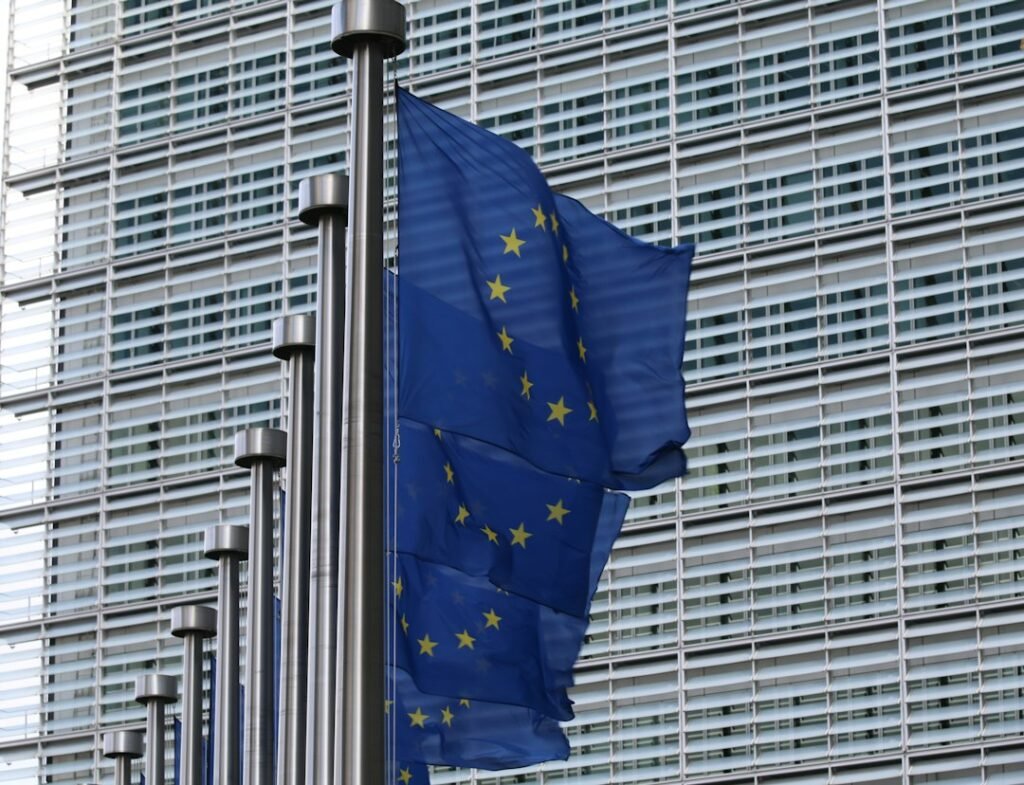
Image: Illustrative photograph of EU flags at the European Commission’s Berlaymont building; Guillaume Périgois / Unsplash. It does not depict the November 10 discussions.
Sources
- Reuters, November 10, 2026
- The Guardian, November 10, 2026
- European Commission, proposed 2028–2034 Ukraine support
- European Commission, Ukraine Facility


About The Author





Leave a Reply