Bulgaria Votes in Presidential Runoff as Black Sea Security and Low Turnout Shape the Stakes
· News Team
SOFIA, Bulgaria — November 1, 2026 (updated approximately 08:00 local time). Bulgarians are voting in a presidential runoff between incumbent Iliana Yotova and former caretaker prime minister Andrey Gyurov, a contest that has become a test of the country’s response to insecurity in the Black Sea and its approach to Russia’s war in Ukraine. Polling is under way; there is no verified runoff winner or final vote tally at this reporting cutoff.
Yotova finished narrowly ahead in the October 25 first round, with roughly 35% of the vote to Gyurov’s 32%, according to results reported by Reuters and the Associated Press. Turnout was only about 23%, leaving both candidates to compete not just for one another’s voters but also for people who stayed home.
Why a largely ceremonial presidency matters now
Bulgaria’s president does not direct day-to-day government policy in the way the prime minister does. But the office can influence the political agenda, represent the country internationally and become a focal point when national-security questions divide the political establishment. That makes the candidates’ positions on Ukraine and the Black Sea consequential even though the election does not itself decide a new government.
Yotova, a former vice president who assumed the presidency after Rumen Radev stepped down earlier this year, is backed by his Progressive Bulgaria movement. She has called for diplomatic engagement to end the Ukraine war and for dialogue with Moscow. Gyurov, supported by reformist and pro-Western parties, has emphasized support for Ukraine and a firmer NATO-oriented security response. Both have condemned attacks on shipping in the Black Sea; their differences lie partly in how explicitly they assign responsibility and what policy response they favor, according to AP’s election-day reporting.
The turnout question could be decisive
The first round’s unusually low participation means the narrow initial margin is not a dependable forecast of the runoff. A relatively modest shift in turnout or second-choice preferences could alter the result. Any interpretation of the outcome will therefore need to separate the winner’s vote share from the share of eligible Bulgarians who actually voted.
Economic pressure is another part of the contest. Concerns about household costs sit alongside worries about deadly attacks on commercial vessels near Bulgaria’s Black Sea coast. These are distinct problems, but they help explain why the campaign has been fought on both domestic stability and foreign-policy positioning.
What happens next
The Bulgarian Central Election Commission lists voting procedures and official election information. Polls are scheduled to close at 20:00 Bulgaria time on Sunday, with provisions for voters already waiting. The first unofficial election-night indications should not be confused with certified results; the official count and any subsequent certification must be checked against the commission.
What to watch: turnout compared with October 25, the size of the eventual margin, and how the winner describes Bulgaria’s security commitments. Tectonics will not report a winner until an authoritative result is available.
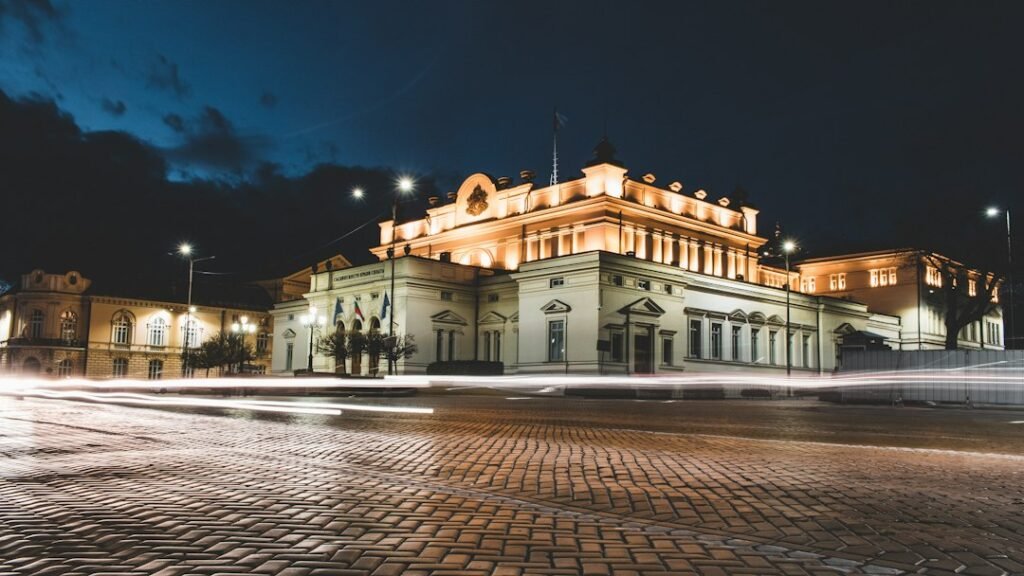
Featured image: Bulgarian parliament building in Sofia, photographed by Angel Balashev / Unsplash. Archival illustrative city photograph; not election-day footage.
Sources and context: Associated Press, Nov. 1; Reuters, Oct. 26; Central Election Commission. For earlier campaign context, see our October 25 voting guide.


About The Author





Leave a Reply