Bulgaria Votes for President as Black Sea Security Divides Candidates
· News Team
SOFIA, October 25, 2026 — Election-day briefing, before verified results. Bulgarians are choosing their next president in a vote that has become a debate about the country’s response to insecurity in the Black Sea and its relationship with European partners.
The Central Election Commission confirms that the presidential and vice-presidential election is scheduled for Sunday, October 25. No official winner or turnout figure is claimed in this pre-result briefing.
Why security has moved to the center of the campaign
Deadly drone attacks on merchant shipping off Bulgaria’s Black Sea coast have raised fears about regional maritime safety as Russia’s war in Ukraine continues. Bulgarian officials have not publicly attributed responsibility for all incidents. Political leaders have offered differing assessments of how closely the country should align with Kyiv and how much emphasis to place on diplomacy.
The vote therefore reaches beyond personalities. It asks how a European Union and NATO member should balance security commitments, regional risks and domestic concerns over escalation.
Who are the main contenders?
Reuters identifies acting President Iliana Iotova, backed by Prime Minister Rumen Radev, and former caretaker Prime Minister Andrey Gyurov, supported by pro-Western reformist parties, as prominent contenders in a wider field. Iotova has emphasized a diplomatic approach and public fatigue with war; Gyurov has argued for stronger support for Ukraine. These are campaign positions, not a complete account of either candidate’s platform.
Polling has suggested Iotova has an advantage, but surveys are snapshots and do not determine the result. Voters may also choose other candidates; the official commission’s candidate information is the appropriate reference for the complete ballot.
What powers does Bulgaria’s president have?
Bulgaria is a parliamentary republic. The president serves a five-year term and has constitutional functions including command of the armed forces, the ability to veto legislation and a role in signing international treaties. Most day-to-day executive power belongs to the government and parliament. That distinction matters: a presidential victory can shape the tone and direction of policy without automatically transferring the government’s powers.
Could there be a second round?
Yes. Under Bulgaria’s electoral rules, a first-round victory requires more than half the votes cast, subject to a turnout requirement. If those conditions are not met, the two leading candidates proceed to a runoff scheduled for November 1, 2026. Early media projections should not be confused with the Central Election Commission’s certified totals.
What to watch after voting
- Official turnout and candidate totals from the Central Election Commission.
- Whether a runoff is required and which candidates qualify.
- Statements on Black Sea security, Ukraine and relations with the government.
- Any credible election-observer findings, with allegations clearly attributed and independently checked.
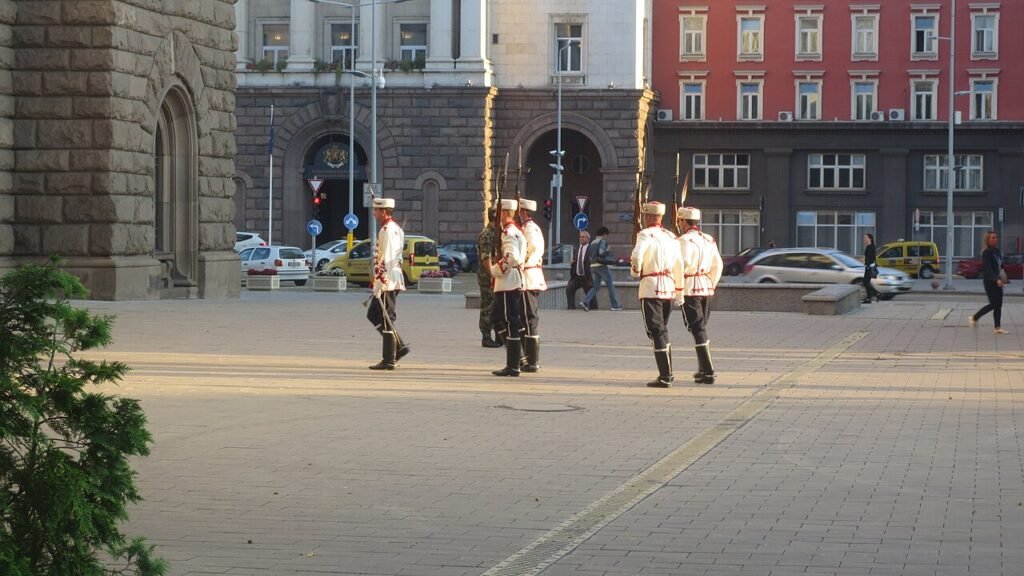
Image note: The featured photograph is an archival view of the Bulgarian President’s Office in Sofia from 2015, not an image of today’s voting. Photographer: Bjoertvedt / Wikimedia Commons, CC BY-SA 4.0; resized for web presentation. Original image and license details.
Sources
- Bulgaria’s Central Election Commission: election schedule and official results.
- Reuters, October 25: election context and Black Sea security debate.
- Associated Press: election rules and constitutional context.
Read more world news from Tectonics Media Publications.


About The Author






Leave a Reply