Ancient Maya Lakes Reveal Centuries of Mercury Pollution—But Did It Contribute to Their Decline?
· News Team
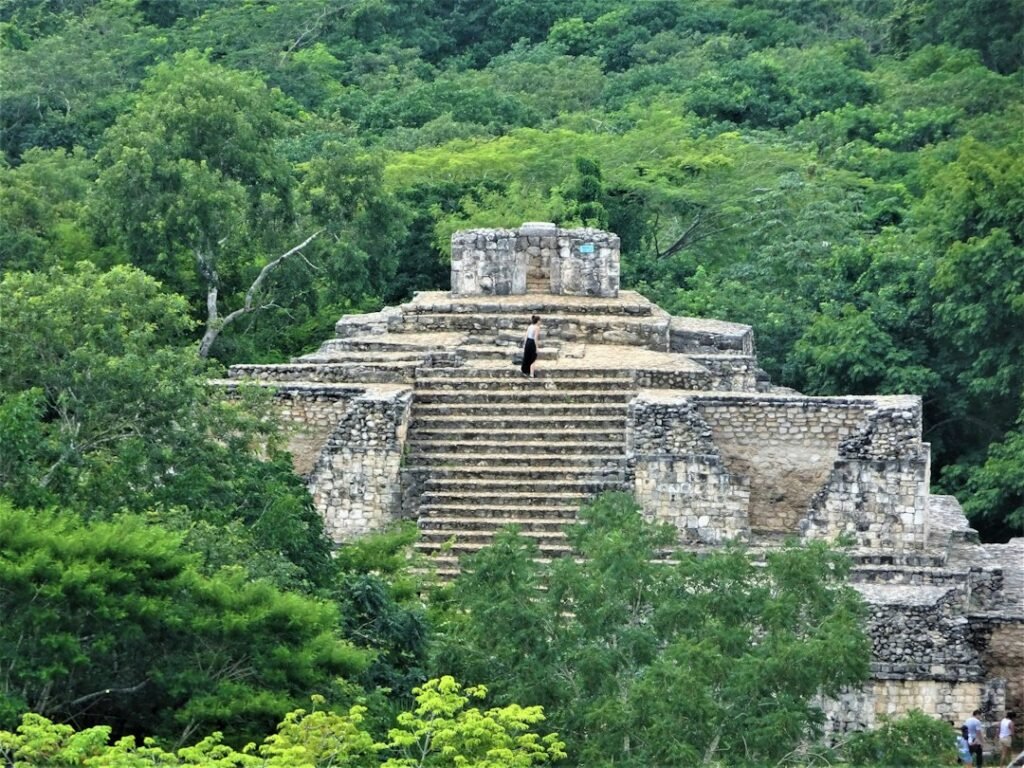
Ancient Maya communities may have faced a form of environmental damage that modern societies know well: persistent toxic pollution in their water systems. A new peer-reviewed study published online November 4 in Science Advances reports unusually high mercury concentrations in sediment from two lakes on Mexico’s Yucatán Peninsula. The findings add water quality to the list of pressures researchers consider when studying the region’s past.
What the sediment reveals
Researchers led by Matthew N. Waters examined sediment cores from Lago Cobá and Cenote Xcach. Layers accumulated over centuries preserve chemical traces alongside remains of microscopic organisms. The team found intervals when mercury concentrations exceeded modern sediment-toxicity guidelines by orders of magnitude, coinciding with major changes in indicators of aquatic life.
At Cobá, contamination rose in the early centuries CE and peaked around 250–300 CE before falling. At Xcach, the elevated concentrations persisted longer, with a peak around 720 CE, according to the study coverage. Declines in biological indicators included algae, bacteria and remains of small aquatic animals. These observations support the conclusion that the lakes experienced severe ecological stress; they do not establish that every organism died at once.
Why mercury was present
Maya societies used cinnabar, a mercury-bearing red mineral pigment, in ceremonial and decorative contexts. The researchers propose that mercury-bearing materials used in surrounding settlements could have entered nearby waters. Comparisons with other lake cores without comparable contamination strengthen the case for localized sources rather than a uniform regional atmospheric event. The exact pathways and amounts of human exposure remain uncertain.
Does this explain the decline of Maya cities?
No single-cause conclusion is warranted. Archaeologists have long studied drought, land-use change, political conflict and other stresses affecting different Maya cities at different times. The new sediment evidence indicates that contaminated water could have added to those pressures in particular locations. It does not prove that mercury caused the collapse of Maya civilization, nor does it directly measure mercury doses in ancient residents.
Modern sediment safety thresholds are a useful benchmark for identifying potential ecological hazards, but they are not a direct reconstruction of ancient drinking-water concentrations or individual health outcomes. Establishing those connections would require further evidence.
Why the finding matters now
The study offers an unusually long record of how a culturally valuable material can leave environmental consequences lasting centuries. Its broader lesson is not that ancient societies understood mercury as modern toxicologists do, but that chemical traces in lake beds can reveal hazards missing from written history. Researchers can now test whether similar patterns appear at other settlements and whether exposure varied with local water sources.
Sources and research
Waters et al., “Toxic mercury, aquatic ecosystem collapse, and the ancient Lowland Maya,” Science Advances (published online November 4, 2026); Reuters reporting, November 6, 2026; Phys.org study analysis, November 5, 2026.
Featured photograph, if displayed, illustrates Maya-period architecture; it does not depict the sampled sediments or contamination.


About The Author





Leave a Reply