Trump Flags Robot Imports as a Security Risk—but Imposes No New Tariffs Yet
· News Team
October 29, 2026 — The United States has formally classified reliance on imported robotics and industrial machinery as a national-security concern. But the most consequential detail in President Donald Trump’s October 28 proclamation is what it does not do: it imposes no new robotics tariff immediately. Instead, it starts a negotiation process that could lead to import restrictions later.
What the White House actually ordered
Under Section 232 of the Trade Expansion Act of 1962, the administration accepted a Commerce Department finding that the volume and circumstances of robotics and industrial-machinery imports threaten to impair US national security. The proclamation directs the Commerce Secretary and US Trade Representative to negotiate with foreign trading partners and provide a progress update within 180 days of October 28, 2026.
The text explicitly keeps future tariffs, duties, quotas and fees on the table. It also mentions possible incentives for domestic production. None of those measures is newly imposed by this particular proclamation. A security-risk determination and a tariff announcement are different policy steps, and treating them as the same would misstate the immediate impact.
Why machinery matters beyond robot makers
Industrial robots and precision machines are inputs to many other industries. Automakers use robotic assembly systems; electronics manufacturers depend on automated production equipment; aerospace and defense suppliers need machine tools and specialized manufacturing systems. Restrictions on imported equipment could therefore affect factories that use robots, not only companies that sell them.
The administration argues that dependence on foreign suppliers exposes US manufacturing and defense readiness to supply disruptions and potential cybersecurity vulnerabilities. Those are the administration’s stated findings; the proclamation does not identify a newly confirmed cyberattack involving a particular imported robot.
For manufacturers planning new plants, the near-term result is policy uncertainty rather than a new duty bill. Companies can continue evaluating equipment under the tariff rules already applicable to their imports, while monitoring whether the negotiations produce country-specific agreements or additional restrictions. Reuters reported that the decision avoids an immediate extra cost for manufacturers heavily reliant on imported machines, while preserving the possibility of later duties.
Three things businesses should watch
First, the negotiating partners and product scope. The proclamation covers robotics, industrial machinery and associated parts and components. Its broad language does not itself establish a new tariff rate or a final product-by-product schedule.
Second, the 180-day update. The deadline requires officials to report negotiation progress, not automatically to introduce tariffs on that date. Further action would require a subsequent decision.
Third, the domestic capacity response. The White House argues that US output is insufficient for national needs. Building domestic capacity, however, requires investment, skilled labor, suppliers and time. A trade negotiation does not instantly create replacement production lines.
The larger trade-off
Supporters of a stronger domestic industrial base see import dependence as a strategic weakness, particularly when machines are embedded in defense production and critical infrastructure. Manufacturers dependent on overseas equipment face the opposite risk: new duties or import constraints could make modernization more expensive before domestic substitutes are available.
The October 28 action leaves that trade-off unresolved. For now, the verified development is a formal security finding and a mandate to negotiate—not a newly effective tariff on imported robots. The next concrete indicators will be the agreements officials pursue and any subsequent legal measures the administration announces.
Primary document and further reporting: White House proclamation, October 28, 2026; White House fact sheet; Reuters, October 28, 2026.
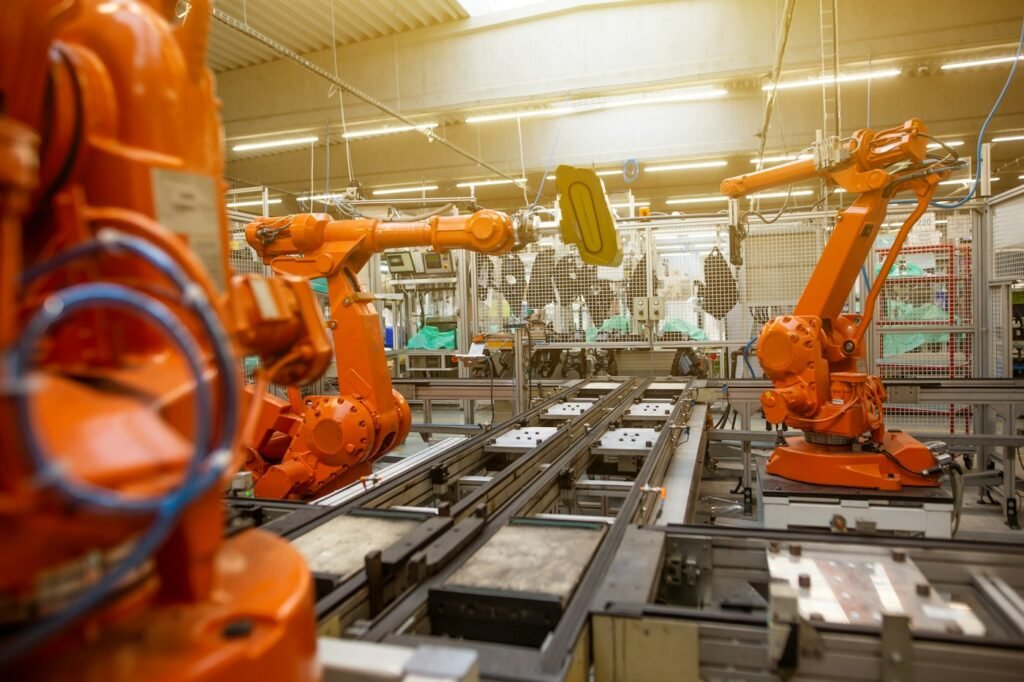
Illustrative image: industrial robots at a factory, photographed by Simon Kadula, via Unsplash (Unsplash License). The photograph is not of the US policy announcement. No exact-event authorized video was verified at publication; the linked official proclamation provides the primary record.


About The Author





Leave a Reply