California Judge Rejects Bid to Set Aside 20,000 Ballots—Why the Election Fight Is Not Over
· News Team
Updated October 29, 2026. A federal judge has refused to order California to separate mail ballots associated with roughly 20,000 registered voters whose citizenship the U.S. Justice Department questions. The decision keeps the state’s existing election-processing procedures in place as the November 3 midterm elections approach, but it does not settle every dispute over voter eligibility.
What the judge decided
U.S. District Judge David O. Carter rejected the Justice Department’s request for emergency relief on Wednesday, October 28. The federal government wanted California election officials to identify and set aside ballots linked to a list of people it says may not be U.S. citizens. Carter found that imposing such a change during voting could disrupt election administration and risk preventing eligible citizens from having their ballots counted. Reuters reported the ruling; the Associated Press independently described the court’s reasoning.
The Justice Department argues that checking the disputed voters before their ballots enter the count is necessary to enforce the ban on noncitizen voting. California officials dispute the reliability of the federal list and say their existing procedures already address eligibility. The central factual distinction is that a government allegation about a list of names is not the same as proof that 20,000 ineligible people voted. Reporting so far has not established how many people on that list actually submitted ballots.
Why the timing matters
Mail voting and ballot processing were already underway when federal officials sought the emergency order. Once a mail ballot is verified and separated from its identifying envelope, tracing an individual vote can become difficult without undermining ballot secrecy. Changing the workflow late in an election can therefore have consequences far beyond the people named in a disputed database.
The case also raises a constitutional question about how far federal enforcement powers extend into election procedures administered by states. Earlier this week, a panel of the Ninth U.S. Circuit Court of Appeals declined to intervene before the district judge had ruled. That earlier decision was procedural, not a final determination of the underlying citizenship allegations. AP’s account of the appellate proceedings explains the distinction.
What happens next
The Justice Department has appealed Carter’s ruling, according to Reuters and AP. The dispute could therefore change as higher courts consider the emergency request. Meanwhile, election officials can continue processing ballots under existing rules unless a court orders otherwise. Federal and state authorities may still investigate individual allegations of unlawful voting; the ruling does not give anyone permission to vote if they are legally ineligible.
Why it matters: The immediate question is whether a court should compel an election system to change its procedures on the basis of contested data just days before voting ends. The longer-term issue is how to balance legitimate eligibility enforcement with safeguards against mistakenly excluding lawful voters. Neither side’s claims should be confused with a verified count of illegal ballots.
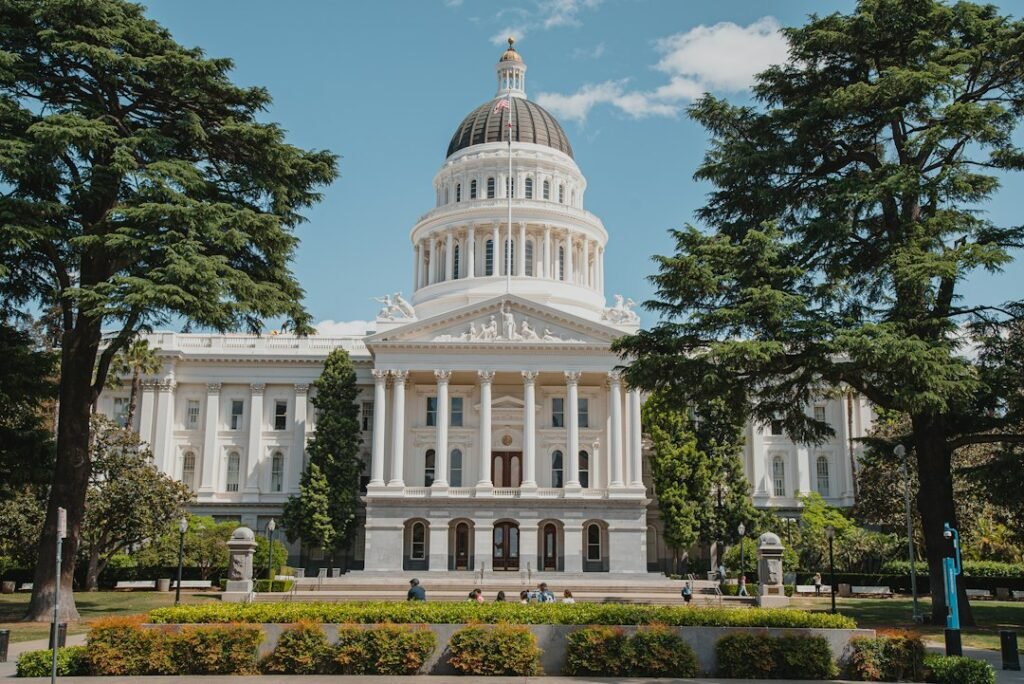
Image: California State Capitol, illustrative stock photograph by Josh Hild / Unsplash. The photograph does not depict the court proceedings. No verified authorized video of the October 28 ruling was located at publication time; unrelated footage has not been embedded.


About The Author





Leave a Reply