Kenya Reports Second Ebola Death as WHO Tracks Bundibugyo Outbreak Across Three Countries
· News Team
NAIROBI, October 24, 2026 — Kenya has recorded a second death from Ebola disease caused by Bundibugyo virus, according to the country’s Health Ministry, while health authorities say the nine confirmed infections remain linked to one known cluster rather than wider community transmission.
The latest patient, a 65-year-old woman who was a close relative and contact of the first patient, died on Friday, October 23, after developing symptoms while already in quarantine. Seven other patients were receiving treatment in two isolation facilities, according to Associated Press reporting and Reuters.
Why the cluster matters
Kenya’s first known patient had travelled from the Democratic Republic of the Congo through Uganda and died in Nairobi on October 5. The eight subsequent confirmed infections were identified among people already being monitored, including relatives and healthcare workers. That is an important distinction: a serious cluster requires a sustained response, but it is not evidence that the virus is spreading unchecked through the wider population.
In a World Health Organization outbreak update published October 23, the agency reported nine Kenyan cases and one death as of October 20. That earlier snapshot predates the second death announced on Friday; the figures should not be mistaken for contradictory reports.
A much larger emergency in Congo
The outbreak’s centre remains the Democratic Republic of the Congo. WHO recorded 9,704 confirmed cases and 4,687 deaths there as of October 20, across 66 health zones in eight provinces. Nigeria has also confirmed an imported case, widening the regional challenge for disease surveillance and contact tracing.
The virus responsible is Bundibugyo virus, one of the pathogens that cause Ebola disease. It should not be confused with the different Ebola virus species that caused several previous outbreaks. WHO says there is currently no approved vaccine or treatment specifically for Bundibugyo virus disease. On October 23, a vaccine-candidate trial known as TUMAINI began enrolling participants in Bunia, Congo, an important research milestone rather than an immediately available public vaccination programme.
What readers should know
Ebola disease is transmitted through direct contact with blood or other bodily fluids of infected people or contaminated materials; it is not spread through ordinary casual proximity in the way many respiratory viruses are. Early recognition, isolation, protective equipment, contact tracing and supportive medical care are central to containment. WHO does not recommend blanket restrictions on travel or trade with affected countries.
What to watch next: whether any infections appear outside the known Kenyan cluster; results of investigations into Nigeria’s imported case; and the progress of the Bundibugyo vaccine trial. Readers should follow updates from WHO and Kenya’s Ministry of Health rather than treating older cumulative figures as current.
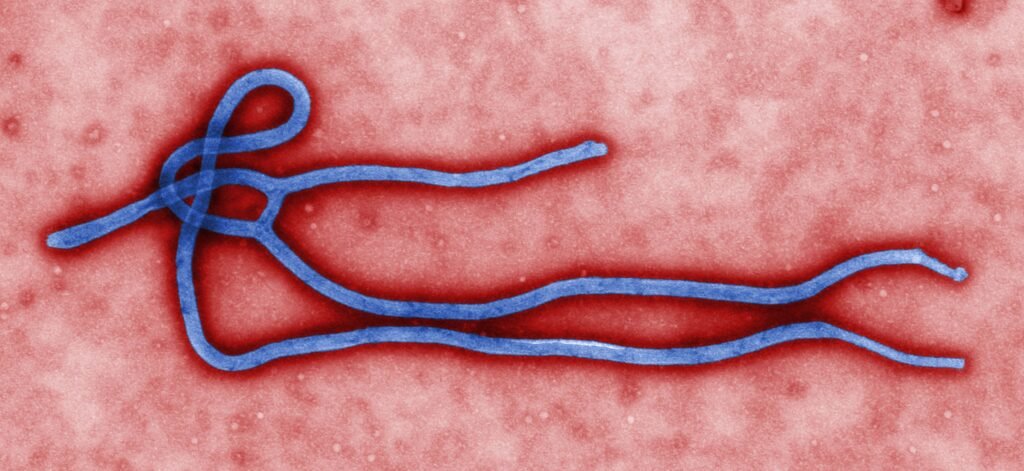
Image note: Featured image is an archival, colorized CDC electron micrograph of Zaire ebolavirus, a different Ebola virus from the Bundibugyo virus in this outbreak. It is used solely to illustrate the broader Ebola virus family, not as a photograph of the Kenyan outbreak or the exact pathogen. Image: CDC/Cynthia Goldsmith, Public Health Image Library #10816, U.S. federal-government public domain. Original image and rights record.
Sources: WHO, October 23; Associated Press, October 23; Reuters, October 23; Kenya Ministry of Health, October 7 (background).


About The Author






[…] related reporting, see Tectonics’ earlier coverage of the regional Ebola response. This report concerns a new Ugandan border policy, not a new confirmed Ugandan […]