$36 Million for a One-Dose Ebola Vaccine Candidate: Why Congo Still Faces a Critical Gap
· News Team
October 28, 2026 — A US government award has given an experimental vaccine against Bundibugyo ebolavirus a major financial boost. But the distinction between funding a candidate and having an approved vaccine matters urgently in the Democratic Republic of the Congo, where an outbreak has already caused thousands of deaths.
What the $36 million award actually covers
Nonprofit biomedical research organization IAVI announced on Wednesday that it received an initial $36 million award from the US Biomedical Advanced Research and Development Authority (BARDA), under a contract with a potential value of up to $99 million. The larger figure is a ceiling that depends on additional contract options; it is not money already awarded in full.
The initial work includes manufacturing investigational doses, preparing for a Phase 1 human study, regulatory planning and updating the candidate to address the variant associated with the 2026 outbreak. Reuters independently reported the award and the development plans on October 28.
Why the vaccine gap is so consequential
Bundibugyo is an ebolavirus distinct from the Zaire ebolavirus targeted by an existing licensed vaccine. There is currently no approved vaccine or specific treatment for disease caused by Bundibugyo virus, according to IAVI and Reuters. That makes it misleading to describe this announcement as a vaccine rollout or a proven new protection for patients.
IAVI’s October 28 release cited 10,060 confirmed cases and 4,887 deaths as of October 25 in Congo. Those figures are a dated snapshot, not a live total. The site has separately covered the outbreak’s case count; the development funding is the new element here.
The candidate uses a recombinant vesicular stomatitis virus (rVSV) platform related to the technology behind the licensed vaccine for Zaire ebolavirus. In animal studies, the Bundibugyo candidate showed protective effects, but it has not yet been evaluated in humans. A proposed ring-vaccination trial during the outbreak would depend on earlier clinical and regulatory steps.
Manufacturing is part of the story
IAVI is coordinating clinical development and regulatory strategy. Hilleman Laboratories is expected to produce early clinical material; SK bioscience would support scale-up; and IDT Biologika would handle filling and finishing doses. The partnership is intended to make future manufacturing and stockpiling more feasible, rather than simply funding laboratory research.
The new BARDA support complements earlier funding from the Coalition for Epidemic Preparedness Innovations. It could help build a vaccine supply chain, but it does not establish efficacy, a delivery date or regulatory approval. The next meaningful milestones are manufacturing readiness, a human safety study and independently evaluated clinical results.
What readers should watch next
Three questions will determine whether the announcement becomes a public-health breakthrough: Can investigators begin human testing quickly and safely? Can the vaccine be updated for the current outbreak variant? And can regulators and manufacturers support trials and eventual access where the epidemic is occurring?
Sources and verification: IAVI’s October 28 primary announcement; Reuters, October 28; IAVI’s June 1 development background. Related Tectonics coverage: Congo Ebola cases pass 10,000.
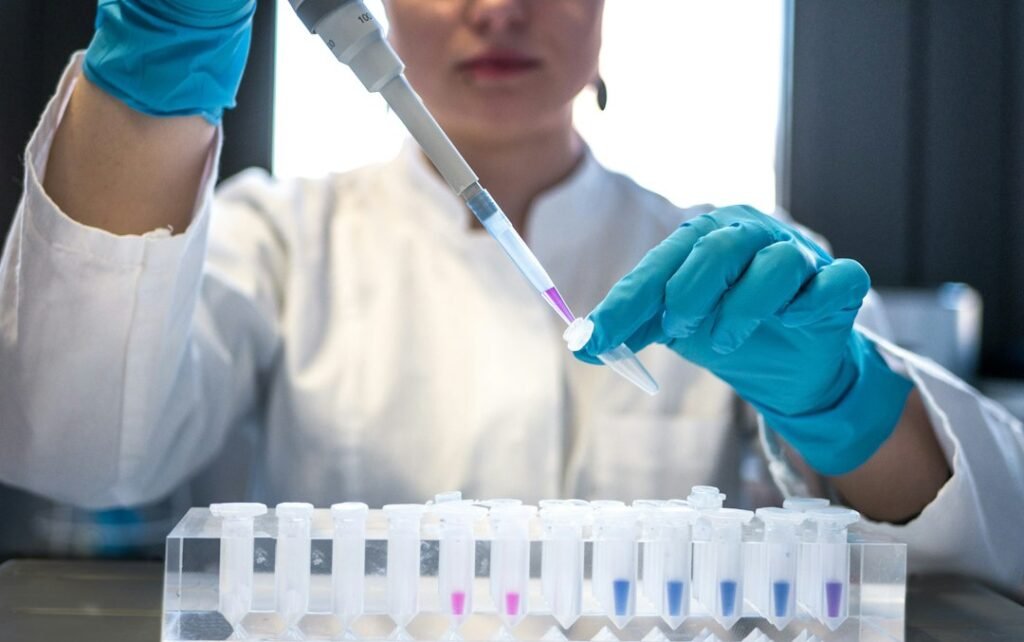
Image: illustrative laboratory photograph by Julia Koblitz / Unsplash; it does not depict this vaccine candidate or the outbreak. No exact-event, authorized video of the funding announcement was independently verified, so no unrelated footage is embedded.


About The Author





Leave a Reply