Delhi’s Diwali Pollution Alert: Why AQI Readings of 581 and 363 Tell Different Parts of the Same Story
· News Team
NEW DELHI, November 7, 2026 — Delhi entered the eve of Diwali under a severe pollution warning, with international and Indian monitoring systems both indicating unhealthy air even though their numerical readings differed sharply. Authorities urged changes to schooling and work arrangements as weather conditions threatened to trap more emissions over the capital.
Two alarming readings — but not the same scale
At 10:35 a.m. local time Saturday, air-quality monitoring company IQAir ranked Delhi first among the major cities in its live global pollution ranking, reporting a US AQI reading of 581, according to Reuters. At 10 a.m., India’s Central Pollution Control Board reported an Indian AQI of 363, in its “very poor” category. A separate Delhi government monitoring page displayed an AQI of 363 at 11 a.m., with 59 of 71 stations reporting and PM2.5 the leading pollutant at most stations.
The difference is not evidence that one system was necessarily wrong: the US-style index used by IQAir and India’s national AQI are based on different methodologies and scales. Readers should not subtract one from the other or treat 581 and 363 as interchangeable measurements. Both point to a substantial public-health concern.
Why the timing matters
The warnings arrived immediately before Diwali on Sunday, November 8. Fireworks can worsen pollution, but the underlying seasonal problem is broader: vehicle exhaust, building dust and agricultural burning combine with winter weather that can hold dirty air close to the ground. Reducing fireworks alone would not remove those other sources.
Officials ordered schools in Delhi and surrounding areas to offer online or hybrid learning arrangements and encouraged working from home, Reuters reported November 6–7. The exact arrangements vary by school level and locality; this should not be interpreted as a universal closure of all schools. Authorities also considered broader restrictions under the region’s graded pollution-response framework.
What the numbers mean for residents
For people with asthma, heart or lung disease, children and older adults, sustained particulate pollution can make ordinary outdoor activity more hazardous. The most useful response is to follow local public-health guidance, check nearby monitoring stations rather than relying only on a citywide average, and reduce unnecessary exposure when readings are high.
Delhi’s official station-level dashboard showed some neighborhoods above 400 while others were lower. That uneven distribution matters for commuters and families: a citywide headline can conceal substantial variation from one area to another.
The larger policy test
Emergency restrictions may reduce short-term exposure, but they do not replace durable improvements to transport emissions, construction dust control, agricultural burning and monitoring. This Diwali episode illustrates how seasonal weather and persistent emissions can combine into a recurring public-health emergency. The question for policymakers is not simply whether air clears after the holiday, but whether baseline exposure falls in the months and years ahead.
Sources and verification: Reuters, November 7; Reuters, November 6; Delhi government live air-quality monitoring; IQAir Delhi monitoring. Numerical readings refer to the specified November 7 observation times, not a current or all-day average.
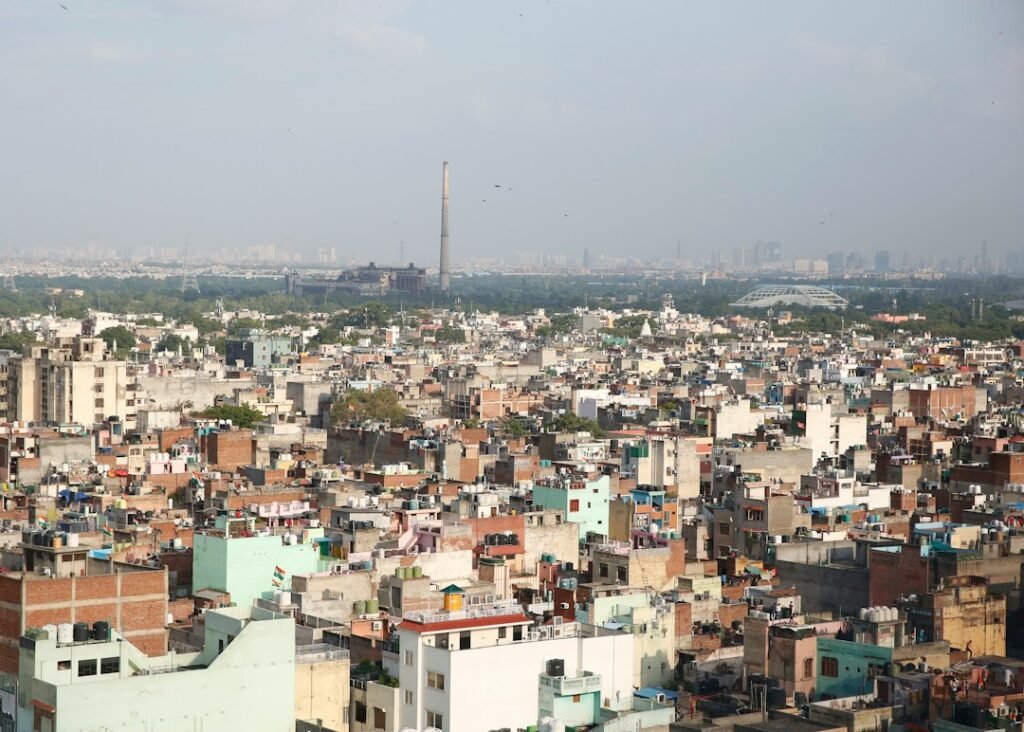
Featured image: archival view of Old and New Delhi by Hakan Nural, via Unsplash. Illustrative; not a photograph of the November 2026 pollution episode.
Video: No verified exact-event authorized video was available at publication; no unrelated footage has been embedded.


About The Author





Leave a Reply