Fossil CO₂ May Fall in 2026 — So Why Are Total Global Emissions Still Rising?
· News Team
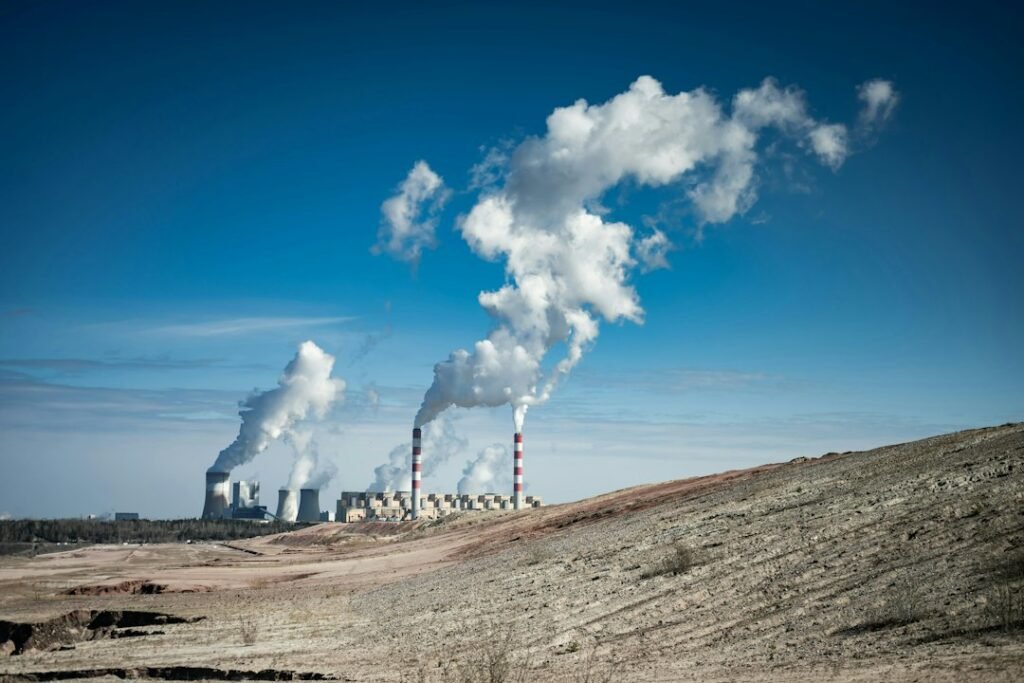
Global fossil-fuel carbon dioxide emissions may edge lower in 2026, but that does not mean humanity’s overall carbon pollution is falling. The Global Carbon Project’s November 10 assessment projects a 0.4% decline in fossil CO₂ emissions to 38.2 billion metric tonnes. Once land-use changes such as deforestation are included, however, total human-caused CO₂ emissions are forecast to rise from 42.8 billion tonnes in 2025 to 43.3 billion tonnes in 2026.
Why the headline decline is not a climate turning point
The projected reduction is small and uncertain: the research preprint places its central fossil-emissions estimate at −0.40%, with an uncertainty range from −1.5% to +0.6%. That range includes a possible increase. It would therefore be premature to declare that global fossil emissions have definitively peaked.
Oil-related emissions are expected to drop about 1.9%, partly because energy-price disruption associated with the Iran conflict reduced demand. Expanding solar and wind generation and electric vehicles are also changing the energy mix. But a geopolitical shock is not the same as a durable, policy-driven reduction in fossil-fuel use. Coal emissions are projected to increase around 0.6%, even as gas emissions edge down.
The land-use warning
Deforestation and other land-use changes explain the seemingly contradictory forecasts: fossil CO₂ can decrease while total CO₂ increases. These are different accounting categories, and confusing them would overstate climate progress. The 2026 estimate for total emissions is 43.3 billion tonnes, compared with 42.8 billion tonnes in 2025.
What to watch next
The critical test is whether emissions decline repeatedly as clean energy displaces fossil fuels—not merely because a conflict temporarily suppresses consumption. The project’s 2026 FAQ puts the remaining carbon budget for a 50% chance of limiting warming to 1.5°C at about 150 billion tonnes, less than four years at today’s emissions rate. That is a probabilistic scientific estimate, not a countdown to a single predetermined climate event.
Sources and methodology: Global Carbon Project, November 10, 2026; Global Carbon Budget 2026 preprint; Reuters reporting, November 10. Figures are forecasts, not final observed 2026 totals. Featured photography: Gabriela / Unsplash (illustrative industrial facility, not an image of a specific 2026 emissions event). The visible plume is not itself a measurement of carbon dioxide.


About The Author





Leave a Reply