America’s Screwworm Defense Has a Bottleneck: Not Enough Sterile Flies
· News Team
November 9, 2026 — The United States is confronting a livestock parasite that it spent decades trying to keep out. The central weakness is not a lack of scientific understanding: it is the limited supply of sterile flies needed to stop New World screwworm from reproducing, according to a Reuters investigation published Monday.
New World screwworm is the larval stage of a fly that lays eggs in wounds of living warm-blooded animals. The larvae feed on living tissue, potentially causing severe injury to cattle, pets and wildlife. Human infections can occur, but the US Centers for Disease Control and Prevention said in its October 29 update that the current risk to the US public remains very low and that no locally acquired US human infestations had been reported.
Why sterile flies matter
Unlike a conventional pesticide campaign, the established eradication technique breeds and sterilizes male flies, then releases them in affected areas. When sterile males mate with wild females, viable offspring are not produced. Repeated releases can reduce the population, but only if enough sterile flies reach the right places for long enough. That is the capacity constraint highlighted by Reuters’ November 9 investigation, which traced production shortfalls and the parasite’s northward spread since 2023.
In August, Reuters reported that the US Department of Agriculture expected a new Texas production facility to begin operating in spring 2027, with capacity ramping up afterward. That is a projected schedule, not evidence that the facility is already producing flies. Expanding production could make containment more resilient, but construction dates and eventual output should not be confused with sterile flies available today.
What the official data actually show
The USDA’s current-status page, updated in early November, documents detections, affected zones, surveillance and changing livestock-import arrangements. It also records phased reopening plans for selected border crossings. Those measures reflect a managed animal-health response, not proof that the parasite has been eliminated. The USDA distinguishes individual treated animal cases from wider infested zones, which may remain subject to controls after an animal recovers.
USDA and state authorities have used sterile-fly dispersal, inspections, surveillance and animal-movement restrictions. In an August 31 announcement, USDA said some Texas zones had met conditions to lift screwworm-specific movement restrictions, while other zones remained in place. That distinction matters: localized improvement does not equal a nationwide all-clear.
Why this matters beyond ranches
For livestock producers, an outbreak can impose costs through inspections, treatment, movement limits and trade disruptions. For policymakers, the lesson is about biological infrastructure: a control system can be scientifically proven yet operationally fragile when its manufacturing capacity and distribution network cannot expand quickly enough. The most useful indicators to watch are confirmed detections, the number and geography of active zones, sterile-fly production and release capacity, and changes in official movement rules—not alarming headlines alone.
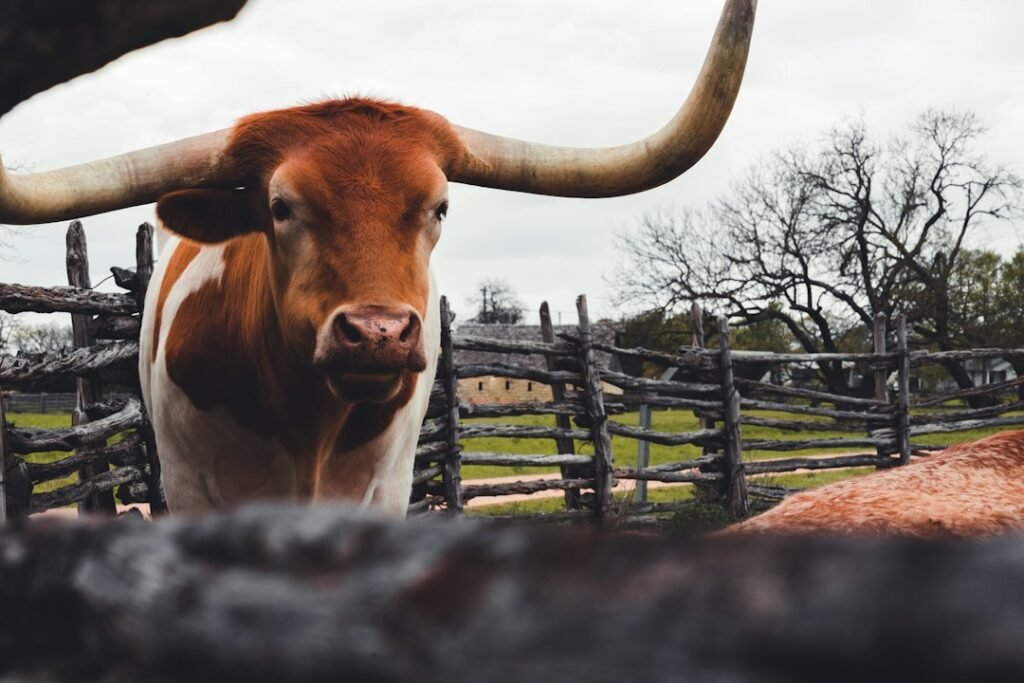
Featured image: illustrative Texas longhorn photograph by Delaney Van / Unsplash. It does not depict an identified infected animal. No third-party event footage is embedded because an exact-event authorized video was not independently validated.
Sources and further reading
- Reuters investigation, November 9, 2026
- USDA APHIS current-status page
- CDC outbreak situation summary, October 29, 2026
- USDA Texas zone release announcement, August 31, 2026


About The Author





Leave a Reply