Tata Communications Plans $450 Million AI Network in India: Why Fibre Capacity Matters
· News Team
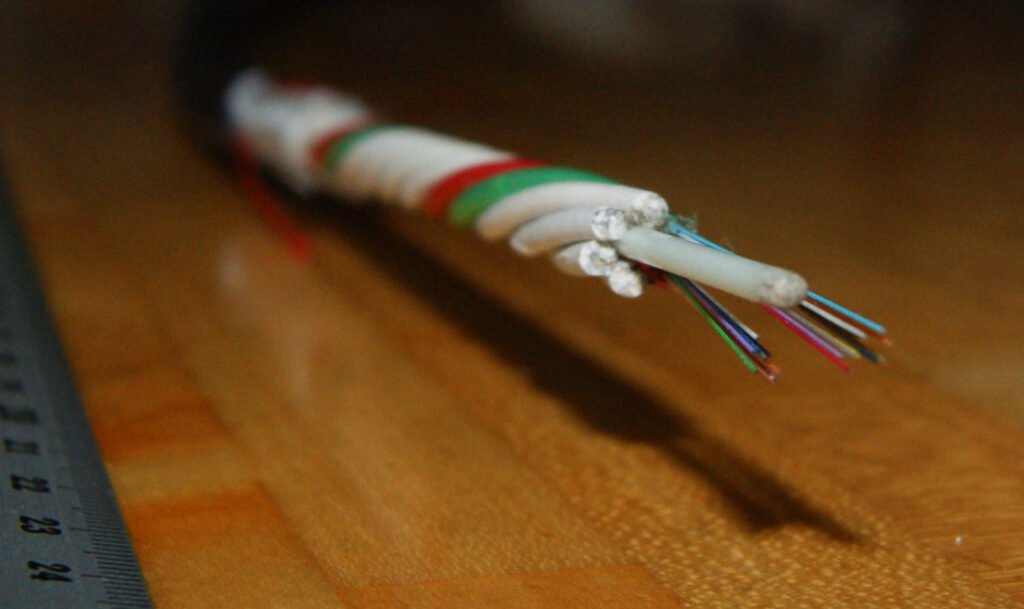
26 October 2026 | Tectonics Media Publications News Desk. India’s AI build-out is moving beyond data-centre servers. Tata Communications plans to invest about ₹4,350 crore (roughly US$400–450 million) in a high-capacity fibre network designed to connect major Indian data-centre and artificial-intelligence hubs, according to company plans reported Monday by Reuters and Indian business media. The proposal is an infrastructure investment plan, not evidence that the full network is already operational.
What has been announced?
The proposed “AI super highway” would add approximately 10,000 kilometres of AI-ready connectivity infrastructure. Company figures reported in India indicate an intended expansion of about 6 petabits per second of network capacity from a current base of roughly 1.25 petabits per second. Implementation is expected to be phased over several years, with a reported fiscal-2030-to-2036 horizon rather than immediate delivery. Tata plans to fund the investment from operating cash flow, according to reporting on the company’s announcement.
Why AI infrastructure needs more than GPUs
AI workloads depend on moving large datasets between storage, computing clusters and users. A powerful data centre can still face bottlenecks when network connections lack bandwidth, resilience or sufficiently low latency. High-capacity fibre can make it easier to connect facilities in different cities and link domestic data centres to international networks. The potential benefit is improved infrastructure for training, inference and cloud services—not an automatic reduction in every customer’s costs or latency.
Executives described demand from hyperscale cloud operators, emerging AI cloud providers and technology firms, according to Moneycontrol’s 26 October interview-based reporting. Those market projections remain company expectations, not independently established future market share.
What is confirmed—and what remains uncertain?
Reuters reported the planned investment on 26 October. The Economic Times separately reported the rupee investment and approximate route length. Earlier company disclosures about an AI-optimised Indian network establish context, but should not be mistaken for completion of this new project.
The announced scale does not establish that every kilometre is financed, permitted or built. The precise route, milestones, customer uptake, construction costs and independent performance benchmarks should be revisited as disclosures become available. The dollar amount is approximate and depends on exchange rates.
The broader infrastructure race
Connectivity is one part of the AI infrastructure equation, alongside reliable power, cooling, land, semiconductors and cloud services. For a regional comparison, see our report on Singapore’s plans to expand electricity capacity as AI demand rises. Both projects illustrate how AI investment can increase demand for less-visible physical infrastructure, though their funding models and timetables differ.
Video and primary documentation
As of this report, we have not verified an exact-event video from an authorised publisher with confirmed embedding permission for the 26 October network announcement. We have therefore not inserted an unrelated clip or empty player. Readers can review the company’s official announcements and the contemporaneous reporting linked above. An exact-event watch link will be added only after its identity, date and permissions are verified.
Editorial note: This article distinguishes the company’s investment plan from completed infrastructure. It will be updated if official project milestones or independently verified results become available.


About The Author





