Russian Strikes Knock Out Power Across Four Ukrainian Regions as Both Sides Trade Drone Claims
· News Team
November 1, 2026 — Russian overnight strikes damaged Ukraine’s electricity infrastructure in four regions, leaving hundreds of thousands of households without power, according to Ukrainian President Volodymyr Zelenskyy. The disruption comes as both sides report large drone operations and a short local humanitarian truce around Oleshky reaches its final day.
What is confirmed — and what is claimed
Reuters reported on Sunday that Zelenskyy said Russian attacks struck power infrastructure in four Ukrainian regions. The Ukrainian Air Force said it had shot down 371 of 433 Russian drones launched since Saturday evening, with some still airborne when it gave its morning update. Those interception totals are statements by Ukraine’s military, not figures independently counted by Tectonics.
Kyiv also said it hit the Kamensky plant in Russia’s Rostov region, which Zelenskyy described as connected to missile production. Moscow had not commented on that particular claim in the Reuters report. In Russia’s Nizhny Novgorod region, Governor Gleb Nikitin reported substantial damage to an industrial site after a Ukrainian drone attack but did not identify the facility. Although the region is home to the NORSI oil refinery, it would be premature to report that the refinery itself was struck without confirmation.
Russia’s defence ministry separately claimed it intercepted 235 Ukrainian drones overnight. The two governments’ figures refer to different attacks and cannot be treated as independently verified or directly comparable.
Why the power grid matters as winter approaches
Electricity infrastructure is not merely an economic target: prolonged outages affect household heating, water pumping, hospitals and communications. A UN-backed inquiry reported by the Associated Press on October 27 concluded that Russia’s deliberate attacks on Ukraine’s energy infrastructure had constituted war crimes and crimes against humanity. Russia rejected the inquiry’s mandate and conclusions. That assessment provides context for the civilian risks but does not itself establish the circumstances of each new November 1 strike.
Ukraine’s energy ministry has previously explained that damage to transmission networks can require scheduled electricity restrictions to prevent broader failures. Its October 8 guidance describes why repairs and grid constraints can continue affecting customers after an attack ends.
The unresolved questions
Repair crews’ access, the number of households still disconnected and the precise facilities damaged may change as local utilities assess the network. There is also no independent confirmation in the cited reporting of the precise industrial facility hit in Nizhny Novgorod. Ukraine says it would support a comprehensive halt to attacks on energy sites but accuses Moscow of rejecting one; Russian officials have criticized Ukrainian attacks on fuel infrastructure. Those competing positions are not an agreed ceasefire.
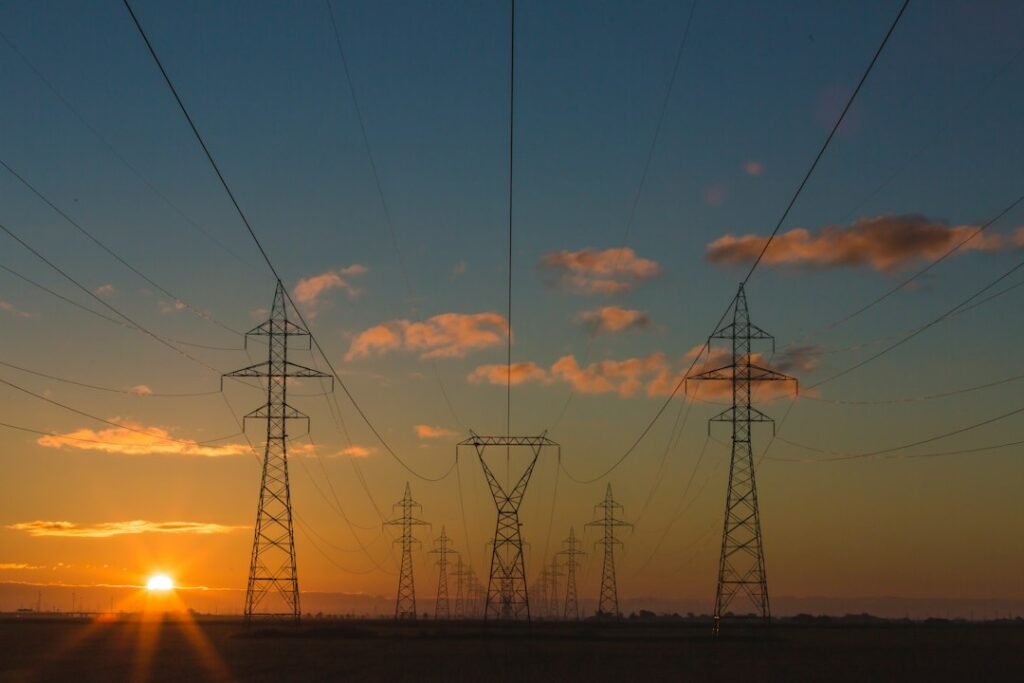
Editorial note: The featured photograph shows electricity transmission lines in a generic setting. It does not depict the November 1 attacks. Photo: Matthew Henry / Unsplash. No exact-event authorized video was independently verified for embedding at publication time.
Sources and verification
- Reuters, November 1, 2026: Russian strikes and cross-border drone claims
- Associated Press, October 27, 2026: UN-backed inquiry on energy-grid attacks
- Ukraine Energy Ministry, October 8, 2026: explanation of grid restrictions


About The Author





Leave a Reply