Pope Leo XIV Casts U.S. Midterm Ballot—A Historic First, Not a Political Endorsement
· News Team
Pope Leo XIV has submitted a mail-in ballot for the United States’ November 3 midterm elections, the Vatican confirmed on Friday, October 30. The Chicago-born pontiff’s vote is described by independent reporting as the first known instance of a sitting pope voting in a U.S. general election. It is a striking intersection of two roles: leader of the Catholic Church and American citizen.
The Holy See’s statement, published by Vatican News, says Leo has exercised his voting rights whenever eligible, including while living in Peru. It does not reveal which candidates he supported. That distinction matters: a confirmed act of voting is not a party endorsement.
Why this is an unusual first
Leo, formerly Robert Francis Prevost, was born in Chicago and became the first U.S.-born pope in May 2025. Associated Press reporting describes the vote as historic because no previous sitting pope is known to have voted in a U.S. general election. The careful phrase is first known; it does not imply that every historical papal voting practice has been conclusively documented.
The November 3 election is a midterm, not a presidential election. U.S. voters will choose the full House of Representatives and a portion of the Senate, alongside state and local offices. In Illinois, where Leo is registered, the ballot includes a governor’s race and an open U.S. Senate seat. Eligible U.S. citizens living abroad can vote absentee in federal elections, and overseas residence alone does not end that right.
A private ballot, not a public endorsement
Leo’s public views on immigration, war and other moral questions have attracted political attention, including disagreements with President Donald Trump. But Reuters and the Vatican provide no evidence of which party or candidate received his vote. Historical records showing participation in different party primaries also do not reveal his choices in this general election.
That uncertainty is essential, not a gap to fill with speculation. A secret ballot remains secret even when cast by a globally prominent figure. Claims on social media assigning the pope’s vote to a candidate should not be treated as fact without reliable evidence.
Why the timing matters
With Election Day just days away, the disclosure illustrates how personal citizenship can coexist with a global religious office. It also raises a question about the boundary between individual civic participation and institutional political neutrality. The Holy See framed the ballot as a continuation of Leo’s longstanding practice, rather than as an intervention on behalf of a party.
What is established is narrow but consequential: the Vatican confirmed that the pope voted by mail; the election is November 3; his choices have not been disclosed. Whether the moment changes public attitudes or political behavior remains unknown.
Sources and image disclosure
Sources: Vatican News / Holy See Press Office (October 30, 2026); Associated Press (October 30); Reuters (October 30).
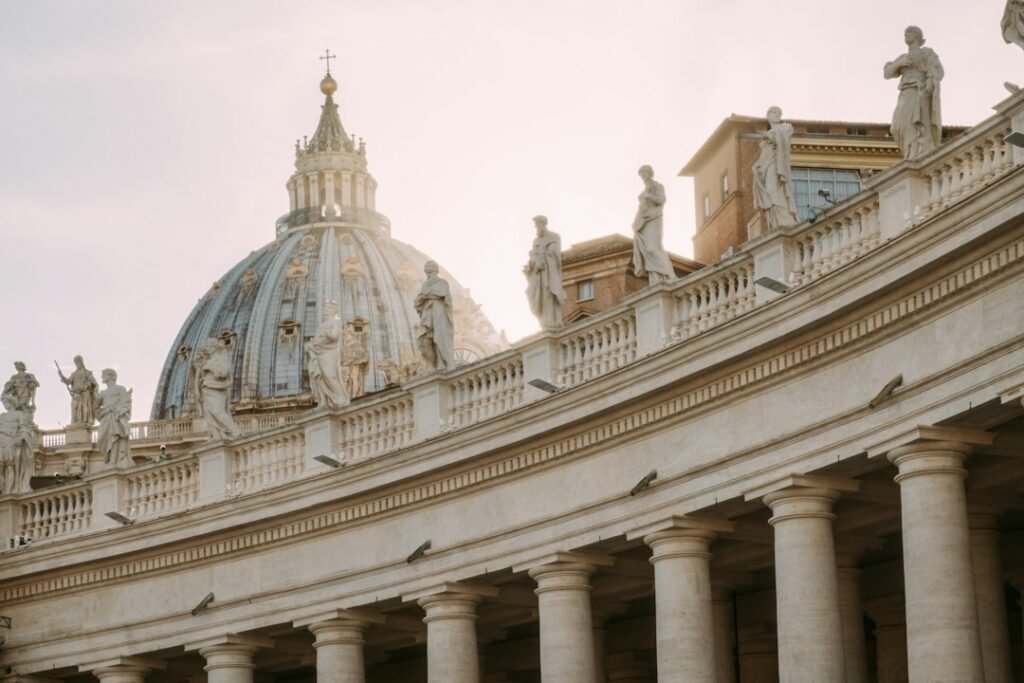
Featured image: illustrative photograph of St. Peter’s Basilica by Simone Savoldi / Unsplash, used under the Unsplash License. The photograph does not show the pope voting. No event footage has been embedded because a matching authorized video with verified metadata and embed permission was not established.


About The Author





Leave a Reply