OPEC+ Freezes December Oil Targets — But Gulf Shipping Risk Still Rules the Market
· News Team
November 1, 2026 — Seven major OPEC+ producers have agreed to leave their required crude-oil production levels unchanged for December. The decision is a signal of policy continuity, but it does not by itself guarantee that more oil can reach international buyers while Gulf shipping remains vulnerable.
What the producers actually decided
Saudi Arabia, Russia, Iraq, Kuwait, Kazakhstan, Algeria and Oman met virtually on Sunday. Their official November 1 statement says December’s required production levels will remain at the levels set for September 2026. The seven countries also reaffirmed their commitment to complying with their wider production agreement and set their next meeting for November 29.
Importantly, this is a decision by a seven-country subgroup, not a claim that every OPEC+ member held a new full ministerial vote on Sunday. Nor is a production target the same thing as oil physically pumped, loaded onto a tanker and delivered to a refinery.
Why an unchanged quota can still matter
According to Reuters’ November 1 reporting, conflict-related export disruption has left several Gulf producers operating below their formal targets. That means an announced quota increase might have only a limited immediate effect if ports, tankers, insurance or shipping routes constrain deliveries. Conversely, keeping targets steady does not necessarily mean actual exports will stay flat: volumes could recover if logistical conditions improve.
The distinction matters for consumers and businesses. Fuel and freight prices react not just to how much crude governments permit producers to pump, but also to how reliably that crude can move through the supply chain. When transport is uncertain, traders may price in disruption risk even without a fresh production cut.
The next decision could be harder
The producers’ November 29 meeting will be closely watched as the group approaches its 2027 production framework. Reuters reports that members must address production-capacity assessments and the future of separate output restraints. Those negotiations can be more contentious than maintaining an existing monthly target, because they influence how much each country may produce later.
For now, the verified news is narrow but important: December’s required production levels are unchanged. Whether oil-market pressure eases will depend heavily on actual exports, shipping security and the next round of decisions. Claims that Sunday’s announcement alone will lower pump prices would go beyond the evidence.
Sources and visual disclosure
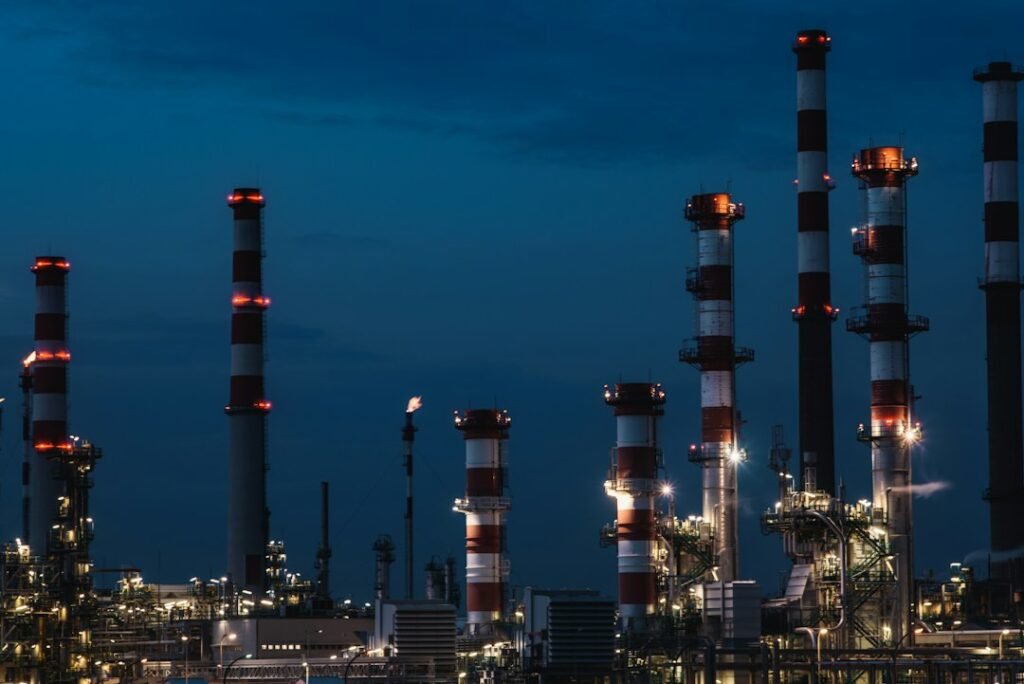
OPEC official statement, November 1, 2026; Reuters, November 1, 2026. Featured photograph is an illustrative refinery image by Maksym Kaharlytskyi / Unsplash; it does not depict the OPEC+ meeting. No exact-event official video was verified for embedding at publication time.


About The Author





Leave a Reply