NASA Asks Companies How to Keep Hubble Alive — But No Rescue Mission Is Approved
· News Team
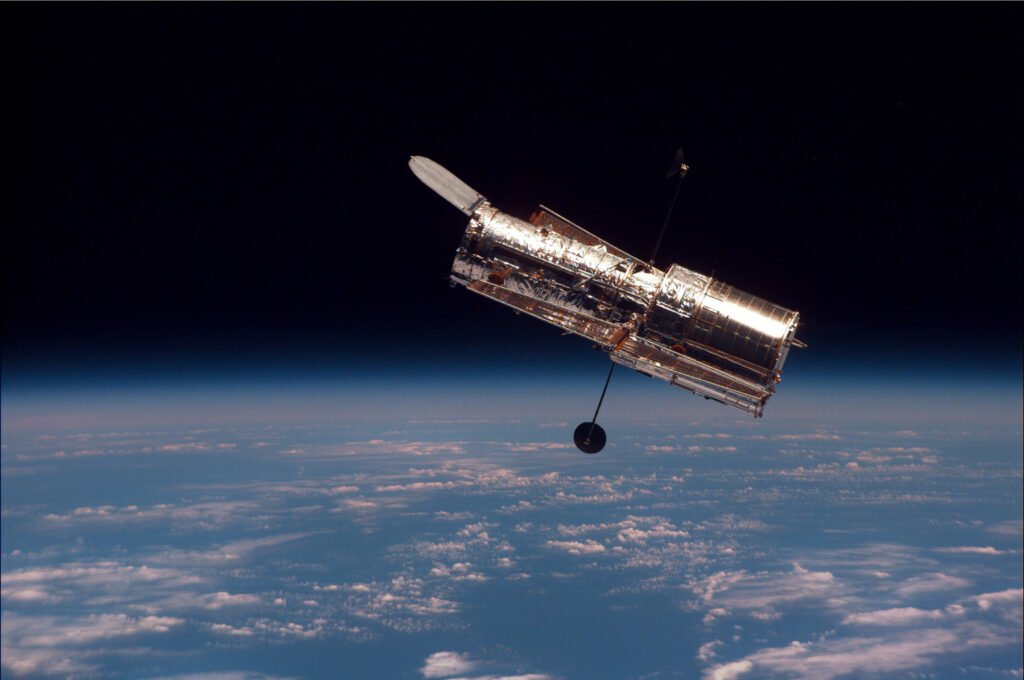
NASA is asking commercial space companies whether they could extend the life of the Hubble Space Telescope, upgrade it or eventually guide it to a controlled end. The announcement is an early market inquiry—not a funded rescue mission or a contract award.
The agency issued a Request for Information on October 29, 2026, and described its options in an October 30 announcement. Responses are due by 3 p.m. Eastern Standard Time on November 30. The distinction matters: companies are being invited to explain what is technically feasible, while NASA has not committed to launching any servicing spacecraft.
Three possible futures for Hubble
NASA wants to understand whether private operators could raise Hubble to a higher orbit, perform work that improves its capabilities, or ultimately conduct a controlled atmospheric re-entry or another form of orbital disposal. These are alternative possibilities, not steps in an approved flight plan. A successful orbital boost could buy the telescope more observing time; a more complex servicing operation would need to confront the risks of approaching, capturing and working around a functioning scientific observatory.
Hubble has been studying the universe since its April 1990 launch and remains scientifically active. Yet its orbit gradually decays because of atmospheric drag, and the telescope has no propulsion system to maintain its altitude. NASA’s current analysis places likely atmospheric re-entry in the 2033–2034 period if no intervention changes its trajectory. That is a forecast, not a scheduled date. The agency says any mission intended to intervene would likely have to occur by 2032.
Why the failed Swift rescue is a warning, not a verdict
The announcement comes shortly after another NASA observatory, Neil Gehrels Swift, ended science operations following an unsuccessful commercial attempt to boost its orbit. Swift’s experience illustrates why a proposed servicing concept must be judged on spacecraft control, rendezvous capability, reliability and schedule—not only the potential scientific payoff. It does not prove that a Hubble mission would fail: the two spacecraft, their conditions and possible mission designs are different.
Hubble itself has a history of being serviced in space. Astronauts on shuttle missions repaired and upgraded the telescope, with the last such visit in 2009. The challenge now is to establish whether commercial spacecraft could provide a practical alternative without the shuttle program. NASA and the European Space Agency jointly support the observatory’s scientific mission, so operational and scientific continuity also matter alongside engineering feasibility.
What to watch next
The immediate milestone is the November 30 information deadline. NASA could use industry responses to shape a later procurement, narrow the technical options or decide that a mission is not justified. None of those decisions has yet been announced. Readers should be cautious of headlines suggesting a company has already been chosen to save Hubble.
The wider significance goes beyond one famous telescope. If robotic servicing can be demonstrated reliably and at a sustainable cost, future missions may be designed around the possibility of repairs and orbital boosts. If it cannot, the risk of losing valuable scientific infrastructure to orbital decay remains. For now, the defensible conclusion is straightforward: NASA is exploring options, not promising a rescue.
Image: NASA archival photograph of Hubble above Earth after its February 1997 servicing mission. It does not depict a proposed 2026 operation. NASA image source.
Sources and further reading
- NASA, October 30, 2026: commercial servicing inquiry and timelines
- U.S. government procurement notice: Hubble servicing Request for Information
- Raumfahrt Aktuell, October 30: independent coverage of the announcement
- NASA, October 23: Swift mission operations end ahead of re-entry


About The Author





Leave a Reply