Explosives Planted on Tanker in Strait of Hormuz: What Is Confirmed—and What Is Not
· News Team
October 30, 2026 — Updated 12:00 UTC. A tanker crossing the Strait of Hormuz was temporarily disabled after a small boat approached and attached two explosive devices to its hull, according to a warning issued by the United Kingdom Maritime Trade Operations (UKMTO) service. The fire has been extinguished, the crew were reported safe and the vessel continued its voyage. The identity of those responsible has not been independently established.
What investigators and maritime monitors actually reported
The reported incident took place at approximately 22:12 UTC on October 29, around 25 nautical miles northeast of Khasab, Oman. UKMTO’s account, relayed by maritime trade publications, says a small craft approached the tanker’s port side and placed two devices above the waterline. The explosions ignited a fire in the engine room and temporarily stopped the ship. Subsequent reporting said there were no crew injuries or pollution. The vessel was able to resume its journey.
These details are supported by Seatrade Maritime’s report of the UKMTO alert and Associated Press reporting. Reuters, citing maritime-security sources, described the devices as limpet mines and reported a possible vessel identification. UKMTO’s publicly relayed warning did not identify the tanker; that distinction matters until an operator or flag authority confirms its identity.
Why the method matters
Unlike a missile or a drone launched from a distance, an explosive device fixed directly to a hull requires close approach. That presents a different challenge for commercial shipping: detection of small craft, watchkeeping and the ability to respond before a vessel is boarded or approached. It does not prove that the same tactic is being used in every recent incident in the waterway.
The Strait of Hormuz is a strategic route for Gulf energy exports. Even a limited attack can affect perceived transit risk and insurance decisions, though the available reports do not establish a specific premium increase caused by this one incident. Reuters’ October 30 oil-market report describes higher prices amid multiple regional supply concerns; the tanker incident should not be presented as the sole cause of those moves.
What remains unverified
Responsibility has not been independently confirmed. Some commentary has attributed recent shipping attacks to Iran, while Iranian officials have made separate claims about mines and other vessels. Those assertions should not be conflated with the verified details of this particular tanker incident. Nor does one temporarily disabled ship amount to a closure of the strait: the vessel reportedly resumed its voyage.
For ship operators, the immediate practical questions concern the precise method of approach, damage inspection, whether other vessels face similar threats and whether maritime authorities issue further warnings. Any update on the attacker’s identity, vessel name or cargo should be treated as provisional until corroborated.
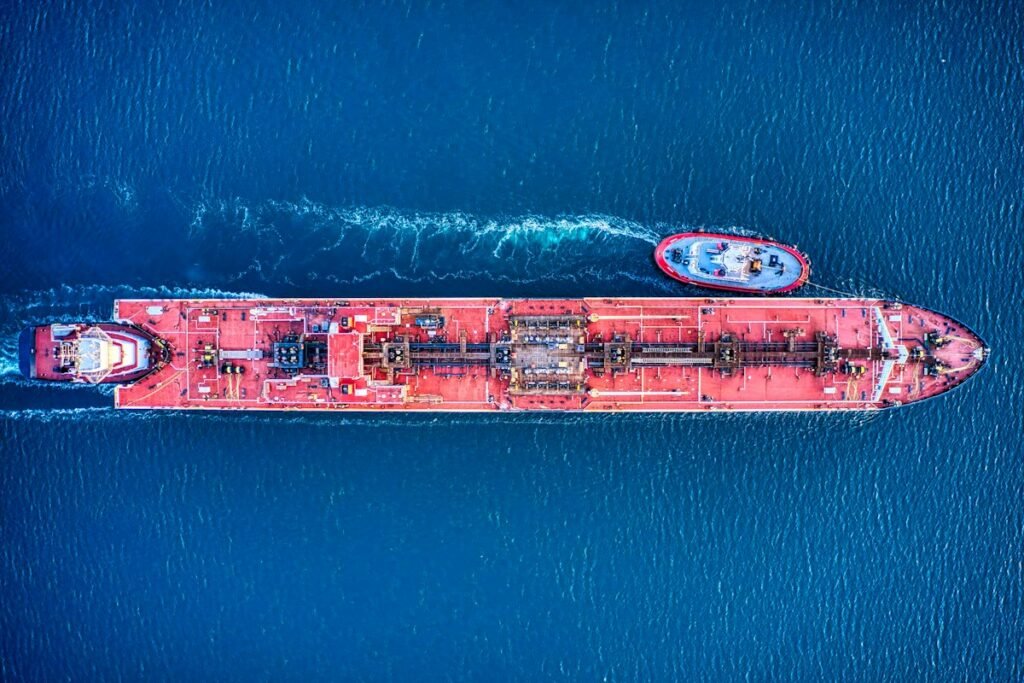
Image: generic tanker photograph by Venti Views / Unsplash, used illustratively. It does not show the affected vessel or the October 29 incident.
Sources and continuing coverage
Seatrade Maritime / UKMTO warning (October 30) · Reuters maritime-security reporting (October 30) · Associated Press (October 30) · Reuters oil-market context (October 30).
Video: No authenticated exact-incident footage with confirmed reuse/embed permission was identified by the publication cutoff. This report does not present generic tanker footage as video of the attack.


About The Author





Leave a Reply