France Sees a 3–5 Year Path Away From China’s Rare-Earth Grip — The Magnet Bottleneck Remains
· News Team
October 28, 2026 — France’s strategic-minerals envoy says Western economies could make meaningful progress diversifying rare-earth supplies away from China within three to five years. The prediction is more ambitious than the pace many industrial buyers have come to expect. But it is not a promise of self-sufficiency — and the difference matters for manufacturers of electric vehicles, wind turbines, industrial motors and defence equipment.
Benjamin Gallezot, France’s strategic-minerals envoy, outlined the timetable in comments reported by Reuters on Wednesday. His argument rests on new processing and supply-chain projects in Europe and partner countries. The critical test is whether these investments deliver usable material at the scale and quality customers need — not simply whether mines open.
Why rare-earth supply has several chokepoints
Rare-earth production is not a single industry. Ore must be mined, separated into individual elements, refined, converted into metals and alloys, and finally manufactured into high-performance magnets. A new mine therefore does not automatically create an alternative source of finished magnets.
The International Energy Agency’s rare-earth analysis estimated that China accounted for about 60% of global mined magnet rare earths in 2024, but roughly 91% of refining and 94% of sintered permanent-magnet production. These are different stages of the supply chain, not interchangeable market-share figures. The magnet-manufacturing concentration explains why sourcing ore from another country may still leave an industrial buyer exposed.
Europe’s targets are milestones, not guarantees
Under the EU’s Critical Raw Materials Act, 2030 benchmarks include at least 10% of EU consumption extracted domestically, 40% processed domestically and 25% supplied through recycling, alongside a goal that no more than 65% of consumption of a strategic raw material at a relevant processing stage comes from a single non-EU country. These are policy benchmarks, not evidence that the necessary plants have already been built.
Europe is supporting separation, recycling and processing projects, including ventures in France. Reuters also reports development efforts in Australia, the United States, Japan, Brazil and India. Even if planned facilities start on time, manufacturers will need qualified output, dependable power, technical expertise and competitive prices. A refinery’s nameplate capacity is not the same as actual commercial production.
The overlooked gap: turning oxides into magnets
The IEA’s 2026 Global Critical Minerals Outlook cautions that announced rare-earth refining capacity outside dominant suppliers is substantially larger than the planned downstream magnet-manufacturing base. It estimates geographically diversified refining projects could cover roughly two-thirds of expected mined supply by 2035, while planned magnet output covers only about one-third. Those are global projections, not forecasts for France alone.
That imbalance suggests a practical risk: Europe could succeed at producing more separated rare-earth oxides and still rely heavily on overseas companies for the final high-value components. Manufacturers also face lengthy customer qualification processes, intellectual-property constraints and the challenge of building production know-how.
What would prove the strategy is working?
The strongest evidence will be operating plants delivering commercially qualified magnets, contracts that diversify actual procurement, and reduced dependence on any single supplier at each processing stage. Governments should track production volumes and reliability rather than counting announcements alone. Recycling can improve resilience, but it depends on collection systems and the available flow of end-of-life equipment.
The bottom line: France’s three-to-five-year timetable is a plausible policy ambition for meaningful diversification, not a verified deadline for ending Chinese dominance. The next decisive measure is whether the new industrial chain can reliably turn material into magnets that customers will buy.
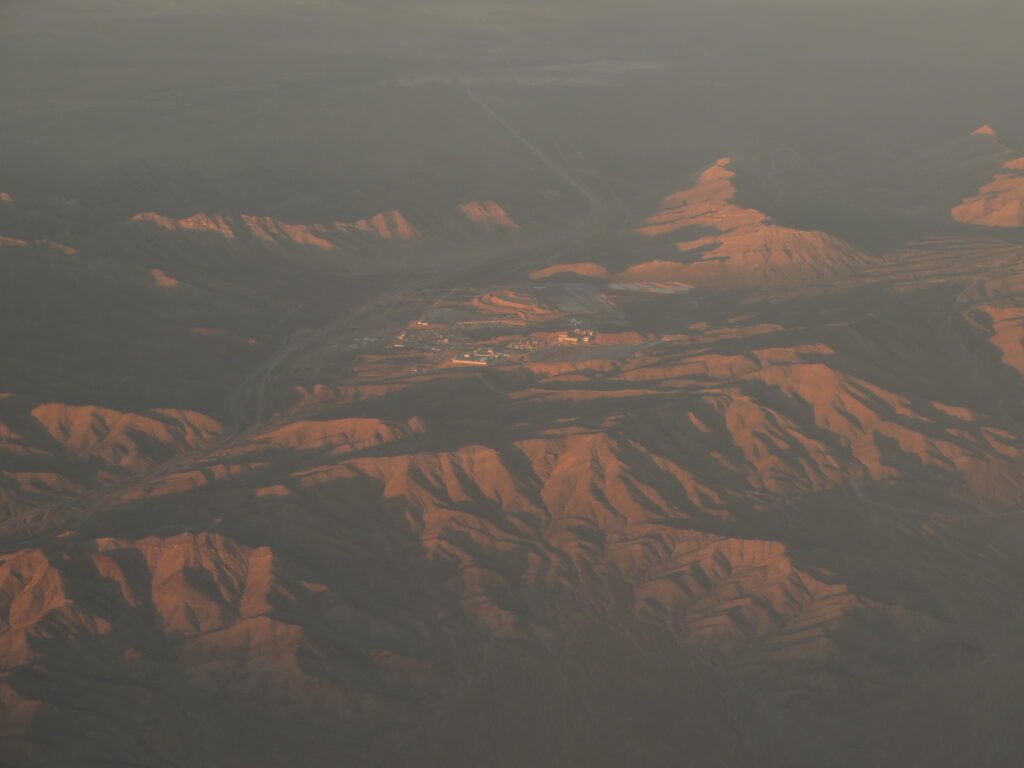
Image: Mountain Pass rare-earth mine in California, photographed in 2014; illustrative of mining, not a French project or today’s announcement. Photo by Ken Lund via Wikimedia Commons, CC BY-SA 2.0; WordPress resized the image for web display.
Source notes: This article combines the October 28 Reuters report with primary research and policy documents from the International Energy Agency and European Commission. It does not claim that any planned project is already producing at commercial scale.


About The Author






Leave a Reply