Paris Protest Routes Tighten as France Deploys 70,000 Police for Halloween Rallies
· News Team
PARIS, October 31, 2026 — France’s Interior Ministry says it has mobilized 70,000 police officers and gendarmes nationwide as a new round of cost-of-living and public-service protests coincides with Halloween. The scale of the operation signals official concern about disorder, but it is not evidence that violence has occurred at today’s demonstrations. Authorities say authorized marches may proceed under security restrictions, while separate evening gatherings that officials associate with calls for violence face bans.
What is confirmed about the security plan?
In an October 31 statement, the Interior Ministry said the deployment matches the 70,000 officers assigned on October 24. It described advance checks around transport routes and city centers, specialist units, drones, helicopters and other crowd-control equipment. The ministry said local prefects have reviewed demonstrations individually and generally routed authorized marches away from sensitive city-center areas. Its account is the government’s description of the plan, not an independent assessment of how the day will unfold.
In Paris, the ministry said the authorized route runs from Porte de Bagnolet to Porte de Charenton after a Council of State decision reversed an earlier court ruling. Le Monde reported that a proposed Bastille-to-Nation march was not authorized, underscoring how court decisions and police orders are shaping where participants can legally gather. People traveling to a demonstration should consult the latest local prefecture notices rather than rely on an earlier route map.
Why are people demonstrating?
The demonstrations follow weeks of mobilization over living costs, wages, school conditions and public services. Trade unions and students have called for further action. Associated Press reports that the unrest has drawn different groups with overlapping but not identical demands; treating all demonstrators as a single political organization would be misleading.
Government figures put attendance at the October 24 marches at 410,000. That is a historical figure for last weekend, not a forecast or turnout count for October 31. The Interior Ministry’s October 31 briefing also cites 1,435 arrests on October 24, a figure that should not be confused with the number of people marching peacefully. Attendance and incident figures for today’s events had not been independently verified at this article’s reporting cutoff.
The civil-liberties question
The dispute is not simply between allowing protests and maintaining public safety. France’s authorities say their restrictions are designed to preserve lawful demonstrations while preventing violence and looting. Critics of broad bans argue that limits on where and who may demonstrate can restrict fundamental freedoms. Whether any particular restriction is justified depends on the local evidence, proportionality and judicial review—not on the assumption that every protester is a security risk.
The immediate test is whether organizers can march peacefully along permitted routes while police distinguish lawful participation from actual violent acts. That outcome cannot be known in advance. This article will require updating if authorities or independent reporters confirm changes to routes, verified turnout, arrests or injuries later on October 31.
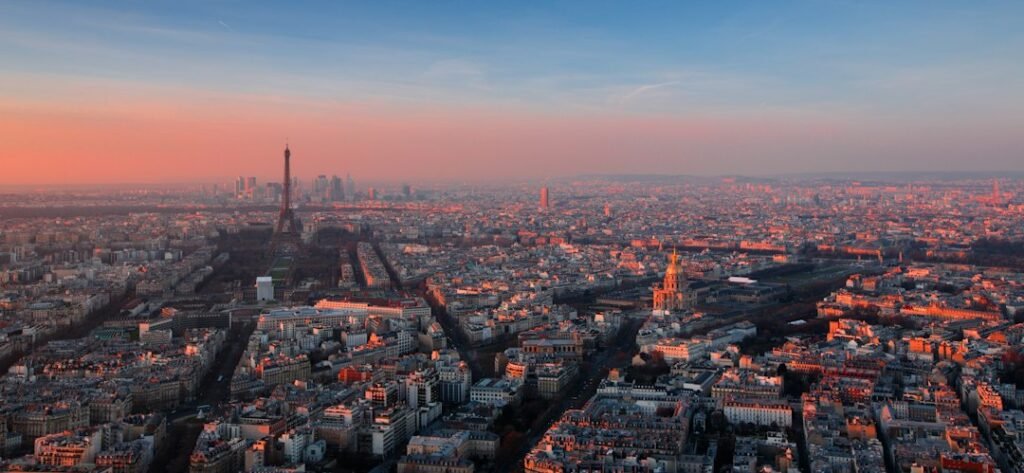
Featured image: Illustrative Paris skyline, not a photograph of today’s demonstrations. Photo by Luca Micheli / Unsplash, used under the Unsplash License.
Sources and further reading: French Interior Ministry (October 31); Associated Press (October 31); Le Monde (October 31); French Interior Ministry (October 24 figures).


About The Author




