China’s Humanoid Robot Boom Faces Its Hardest Test: Making the Machines Useful
· News Team
November 2, 2026. China’s humanoid robotics race is moving beyond machines that can dance, run and perform demonstrations. The harder commercial question is whether those robots can reliably handle unfamiliar work in factories, warehouses and services without an engineer programming each action in advance.
A Reuters report published November 1 describes a shift toward embodied artificial intelligence: software that interprets the physical world, learns from data and adjusts a robot’s actions. That distinction matters because an impressive laboratory demonstration is not the same thing as dependable, affordable operation in a changing workplace.
Capital is arriving faster than proof of mass deployment
Industry investment tracker ITJuzi estimates that China’s embodied-AI sector attracted about 93.5 billion yuan (roughly $13 billion) across 322 disclosed financing deals in the first half of 2026, around five times the year-earlier amount. The tally has also been reported by sector publication Embodied Global. These are disclosed financing figures, not audited revenue, profits or evidence that robots are performing paid work at scale.
The industrial pipeline is expanding. At an October 19 briefing, a Chinese industry official said the country had developed more than 400 humanoid robot models and produced over 40,000 units by the end of June, with annual production expected to exceed 100,000. Those are government-reported production figures and a forecast, not independently verified counts of productive installations.
The software challenge is different from the hardware challenge
Making a humanoid walk is an engineering achievement; teaching it to identify an unexpected object, grasp it safely, recover from a mistake and repeat the task for an entire shift is a different challenge. Developers are testing training through human demonstrations, simulation and data collected from machines. None of these approaches alone establishes that robots can generalize reliably across unfamiliar environments.
China’s authorities are also trying to shape the market’s safety and technical foundations. In March, the country announced a national standards framework spanning robot computing, hardware, applications and safety. Standards may help companies build compatible, testable systems, but they do not solve the central learning problem by themselves.
For businesses considering robotics, the useful benchmarks are therefore narrower than funding or flashy demonstrations: task-completion rate, failure recovery, human supervision required, uptime and cost per completed job. Those measures will determine whether embodied AI becomes a durable industry or a crowded market of expensive prototypes.
Sources: Reuters, November 1, 2026; Embodied Global’s first-half financing analysis; China State Council Information Office, October 20; national robotics standards announcement, March 2.
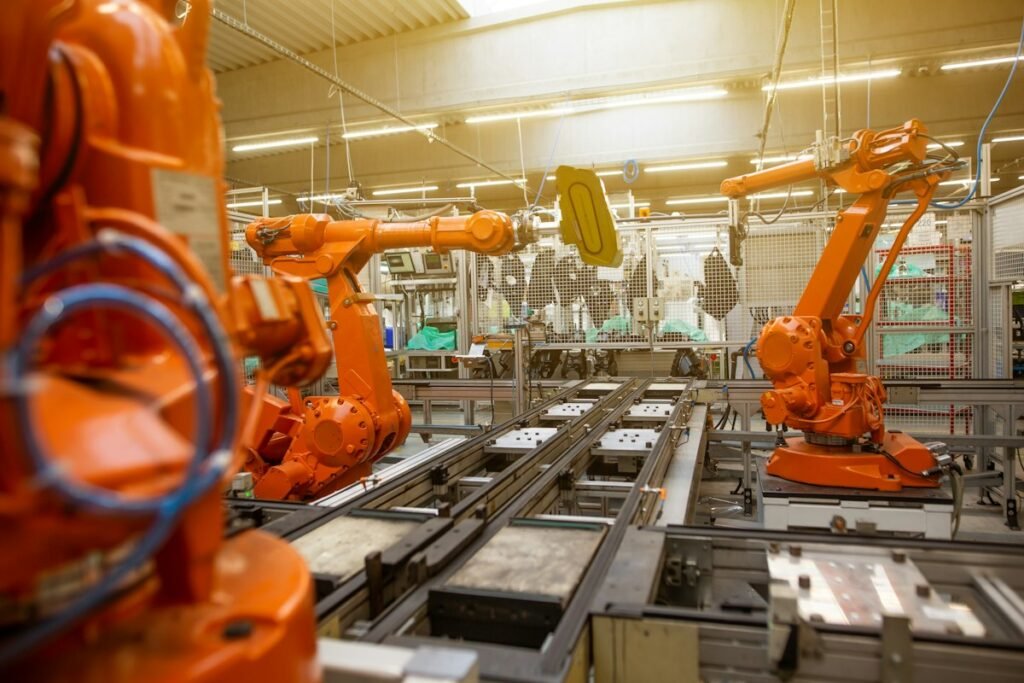
Featured image: illustrative industrial automation photograph by Simon Kadula / Unsplash; it does not show the specific Chinese humanoid robot systems discussed. No exact-event video has been embedded without independently verified identity and permission.


About The Author





Leave a Reply