Bangladesh Creates Garment Wage Board as Workers Demand 2.4 Times Current Pay
· News Team
November 1, 2026 — Bangladesh has created a six-member wage board to review pay in its vast garment industry after a wave of demonstrations disrupted factories and roads around Dhaka. The move opens a negotiation process, but it does not mean a higher minimum wage has already been agreed.
Why workers are still on the streets
Garment workers are seeking a minimum monthly wage of 30,000 taka, compared with the existing 12,500 taka. They say housing, food, transport and healthcare have become harder to afford. The proposed figure is 2.4 times the current minimum, making the gap between workers’ demands and employers’ likely ability to pay the central question for the new board.
According to Reuters’ November 1 report, protests continued after the board’s formation. Road blockades and clashes with police were reported in garment-producing areas, while factory closures affected production. The Times of India also reported demonstrations in Dhaka and Gazipur, including police deployments and disrupted transport. Accounts of particular incidents and damage remain subject to further verification as events develop.
Why the dispute matters beyond Bangladesh
Bangladesh’s ready-made garment industry employs roughly four million people and accounts for more than four-fifths of the country’s export earnings, according to Reuters. That makes this more than a domestic pay dispute: delays at major manufacturing hubs can affect delivery schedules for international clothing retailers, while an extended stoppage would put pressure on both workers’ incomes and factories’ cash flow.
There is no simple trade-off between wages and competitiveness. Higher pay could ease household financial stress and improve worker retention, but manufacturers say energy costs, input prices and uncertainty over orders already constrain their budgets. The board’s challenge is to produce a wage proposal that workers consider meaningful and factories can implement, with a credible timetable rather than an announcement alone.
What happens next
The immediate questions are whether worker representatives and manufacturers can agree on a revised minimum, when any new rate would take effect, and whether the demonstrations and factory closures subside. Until those decisions are published, 30,000 taka remains a demand, not an enacted wage. We will update this report if the board issues a formal decision.
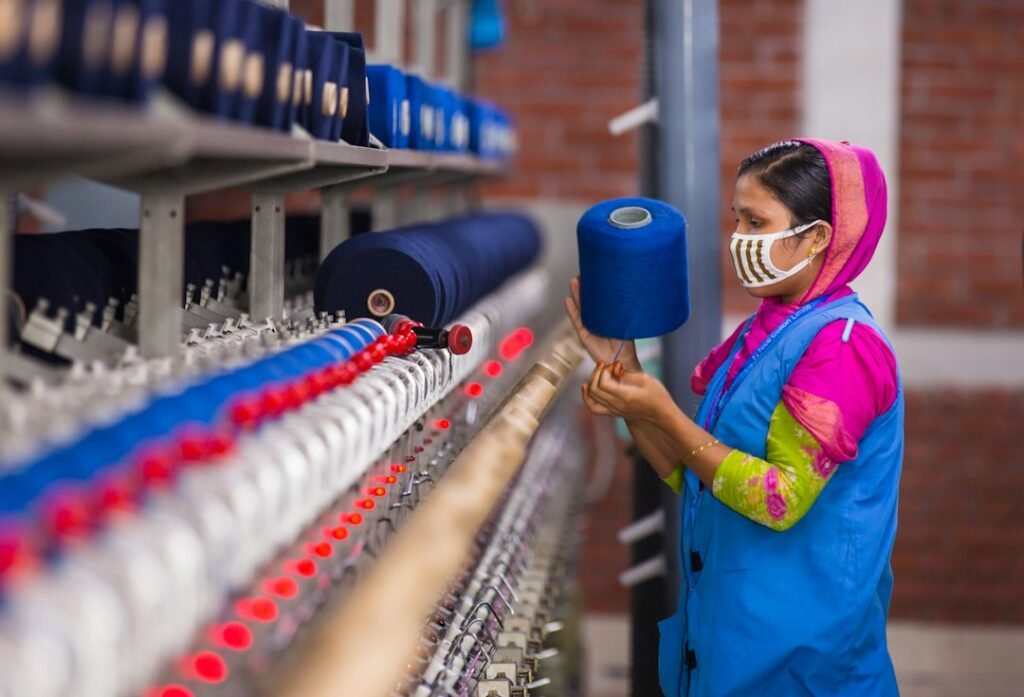
Reporting basis: Reuters (November 1, 2026) and The Times of India (November 1, 2026). Featured image: illustrative Bangladesh garment-industry photograph by Shanjir H / Photo4life AU via Unsplash; it does not depict the November 1 protests.


About The Author





Leave a Reply