Airbus’s €3 Billion EIB Financing Sparks U.S. Trade Warning — What Is Actually at Risk?
· News Team
October 27, 2026 — Business & World. A dispute over how Europe finances its largest aircraft maker has put a renewed spotlight on the trade truce between Washington and Brussels. U.S. Trade Representative Jamieson Greer said on October 26 that a European Investment Bank (EIB) financing package for Airbus raised serious questions about the terms of the transatlantic agreement. That warning is not the same as a formal finding that the loan breaches trade rules, and no new aircraft tariffs were announced in his statement.
What Washington is challenging
Greer said U.S. officials had sought information about the EIB arrangement without receiving the details they wanted. His concern is whether public financing is being offered on market terms, a central issue in the long-running dispute over government support for Airbus and its American rival Boeing. The October 26 U.S. Trade Representative statement calls for the matter to be resolved and warns of uncertainty for aerospace trade. It does not establish that the bank has violated the agreement.
What the European bank actually announced
The distinction between a financing envelope and money already lent matters. On June 29, the EIB announced a €3 billion approved financing envelope for Airbus research and development, with an initial €1 billion loan signed. Its stated purpose is to support investments through 2030 in commercial aviation, security and defence technology, with projects in France, Germany and Spain. The EIB’s original announcement describes long maturities and flexible financing terms, while Airbus said the arrangement would support its research programme and financial flexibility.
The EIB’s announcement is evidence of the package’s size and intended uses; it is not, by itself, an independent assessment of whether every term meets the market-financing standard Washington invokes. Conversely, Greer’s criticism does not prove that unlawful subsidies were granted. Reuters’ October 27 report records the competing positions and the renewed risk to the aerospace trade détente.
Why this matters beyond Airbus
Aircraft programmes require years of engineering, testing and supplier investment. Predictable long-term funding can influence how manufacturers plan future products, while trade uncertainty can affect suppliers on both sides of the Atlantic. The argument is therefore not simply about a single loan: it concerns where governments draw the line between legitimate industrial investment and financing that gives one producer an unfair advantage.
The United States and European Union suspended retaliatory tariffs linked to the aircraft-subsidy dispute under a 2021 arrangement. A new disagreement over financing does not automatically end that pause, but it raises the stakes for future negotiations. The key questions are whether the parties exchange enough information to assess the loan, whether its terms can be shown to be market-based, and whether either side takes formal trade action.
What to watch next
Watch for publication of additional EIB loan terms, responses from European trade authorities, and any formal U.S. announcement on the tariff arrangement. Until then, the most accurate description is a dispute over transparency and potential compliance—not a proven subsidy violation or a restarted tariff war.
Sources: Office of the U.S. Trade Representative, October 26, 2026; European Investment Bank, June 29, 2026; Reuters, October 27, 2026.
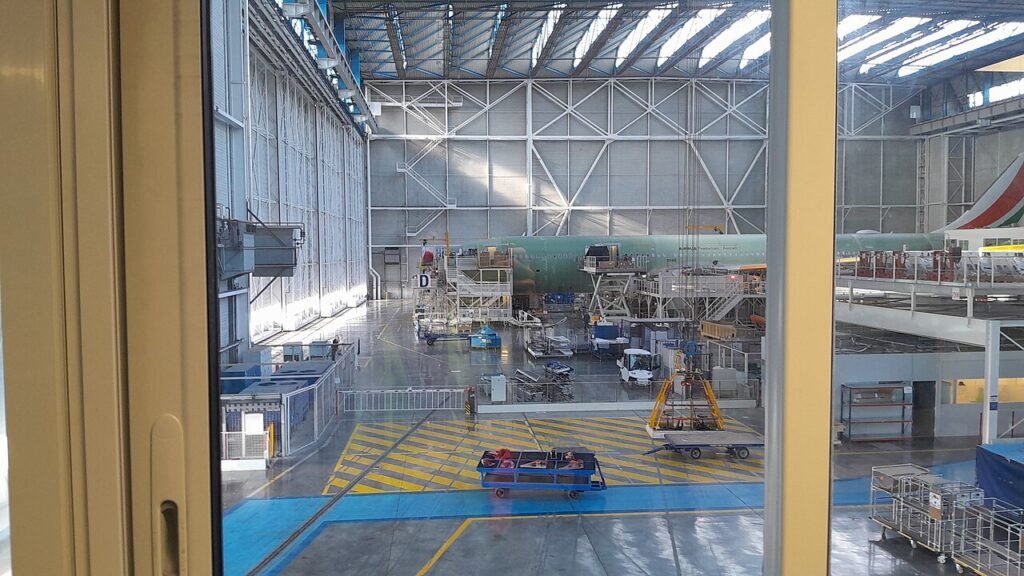
Featured image: Archival photograph of an Airbus A330-800neo at the Toulouse final assembly line, taken January 23, 2025 by AeroFan09. Source: Wikimedia Commons; licensed CC BY-SA 4.0. Resized to 1280 × 720; no implication that the photograph depicts the October 2026 financing dispute.
Video note: No newly published exact-event video was independently verified for embedding at the time of this report. The primary statements above are linked directly instead.


About The Author






Leave a Reply