New Zealand Election: Luxon’s Coalition Leads by One Seat, but Special Votes Could Change Everything
· News Team
WELLINGTON, November 8, 2026 — New Zealand’s election has left Prime Minister Christopher Luxon’s governing alliance with a provisional parliamentary majority so narrow that the country’s next government may not be settled for weeks. The official preliminary count projects 67 seats for National, ACT and New Zealand First combined in a 131-seat parliament, where 66 would constitute a majority. But special ballots are not yet included in the final official tally, and neither major party has declared victory.
Why a projected majority is not a final result
The Electoral Commission’s preliminary results allocate 42 seats to National, 13 to ACT and 12 to New Zealand First. Labour is projected at 36 seats, the Greens at 16 and Te Pāti Māori at five. The new Opportunity Party is projected to enter parliament with seven seats. These figures describe a provisional seat allocation, not a certified outcome.
About 14% of votes, including ballots cast overseas and outside voters’ home electorates, remain in the special-vote process, according to Reuters’ November 8 report. Such votes have historically been more favourable to parties on the left. That historical pattern is not a prediction of the final result, but it explains why a one-seat cushion should not be treated as a secure mandate.
What the vote says about the political landscape
The nationwide party vote is exceptionally close: Labour received 29.36% of the preliminary party vote and National 29.21%, according to the commission. Under New Zealand’s mixed-member proportional system, governing power depends on coalition arithmetic rather than which of the two largest parties wins the largest individual vote share. National’s projected partners could keep Luxon in office, but a shift in the final seat distribution could change who has a viable path to a majority.
The Opportunity Party’s projected seven seats are also consequential. If the final count deprives the incumbent alliance of its slim edge, a new party could become a negotiating partner or pivotal parliamentary actor. No coalition agreement involving Opportunity should be presumed from these preliminary figures.
What happens next
The Electoral Commission says it aims to publish official results on Friday, November 27. Until a government is formed, Luxon continues in a caretaker capacity. Coalition talks could extend beyond the official count, particularly if party leaders need to reconcile economic priorities, spending commitments and electoral-system reform.
The central distinction for readers is straightforward: the incumbent alliance leads in projected seats, but New Zealand has not yet certified an election winner. Tectonics will update this analysis when the Electoral Commission publishes final results or when a verified coalition agreement changes the political outlook.
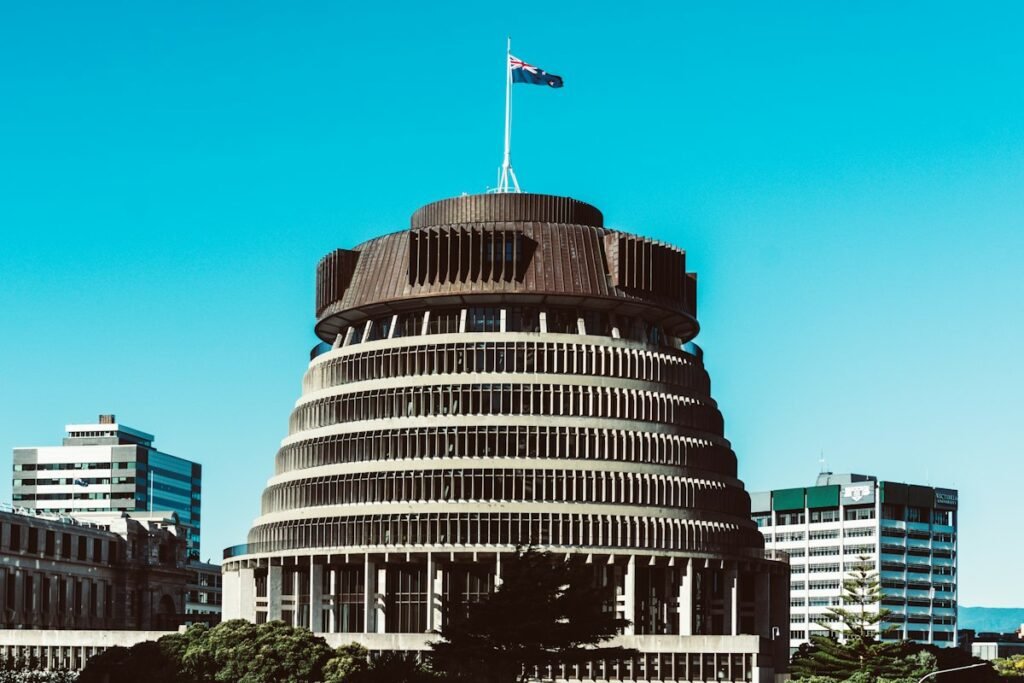
Illustrative featured photograph: New Zealand Parliament’s Beehive building, by Sulthan Auliya / Unsplash. It does not depict the election count or party negotiations.
Sources and verification
New Zealand Electoral Commission — 2026 preliminary overall results; Reuters, November 8 — preliminary result and special-vote uncertainty; Associated Press, November 8 — coalition outlook.


About The Author





Leave a Reply