South Korea’s $616 Billion Budget Puts AI and Chips at the Center — but Parliament Holds the Key
· News Team
SEOUL, November 2, 2026 — South Korean President Lee Jae Myung urged lawmakers on Monday to back a record 820.9 trillion-won (approximately $615 billion) spending plan for 2027, casting investment in artificial intelligence and advanced industry as a route to broader economic growth. The proposed budget is 12.8% above this year’s original budget, but it still requires parliamentary approval.
What the proposed AI spending actually covers
The government’s 21.3 trillion-won allocation covers AI and a group of strategic projects, including semiconductor infrastructure, so-called physical AI — technology deployed in machines and industrial settings — and AI data centers. That is close to double the comparable 2026 provision, according to reporting on the proposal. It would be misleading to treat all 21.3 trillion won as money for AI software alone, or as spending already approved.
Lee used his National Assembly budget address to argue that technological investment should create opportunities beyond the companies and regions that have benefited most from South Korea’s export-led growth. His appeal comes as demand for advanced memory chips supports the country’s manufacturers and tax receipts, but also makes the outlook sensitive to the global AI investment cycle.
Why the proposal matters beyond South Korea
The plan reflects a larger contest over where the computing infrastructure for AI will be built and who will supply it. Subsidies, research spending and electricity infrastructure can influence the economics of new chip plants and data centers. But the link between public funding and commercial success is not automatic: construction schedules, power availability, talent and sustained demand remain constraints.
The administration is also proposing a 162.3 trillion-won Future Response Fund intended to direct resources toward growth industries, young people, regional development and education. That approach raises a fiscal-policy question: how much of a revenue windfall associated with the chip boom should be invested immediately, and how much should be reserved or used to reduce debt?
The next decision is political
South Korea’s National Assembly must examine and vote on the plan. Lawmakers can alter spending priorities before passage; the proposal therefore should not be described as a completed national investment. The December 2 statutory budget deadline provides the next milestone, although negotiations may change the amounts and timing.
For investors and technology suppliers, the meaningful indicators will be the final appropriation, procurement rules, project approvals and actual construction — not the headline figure alone.
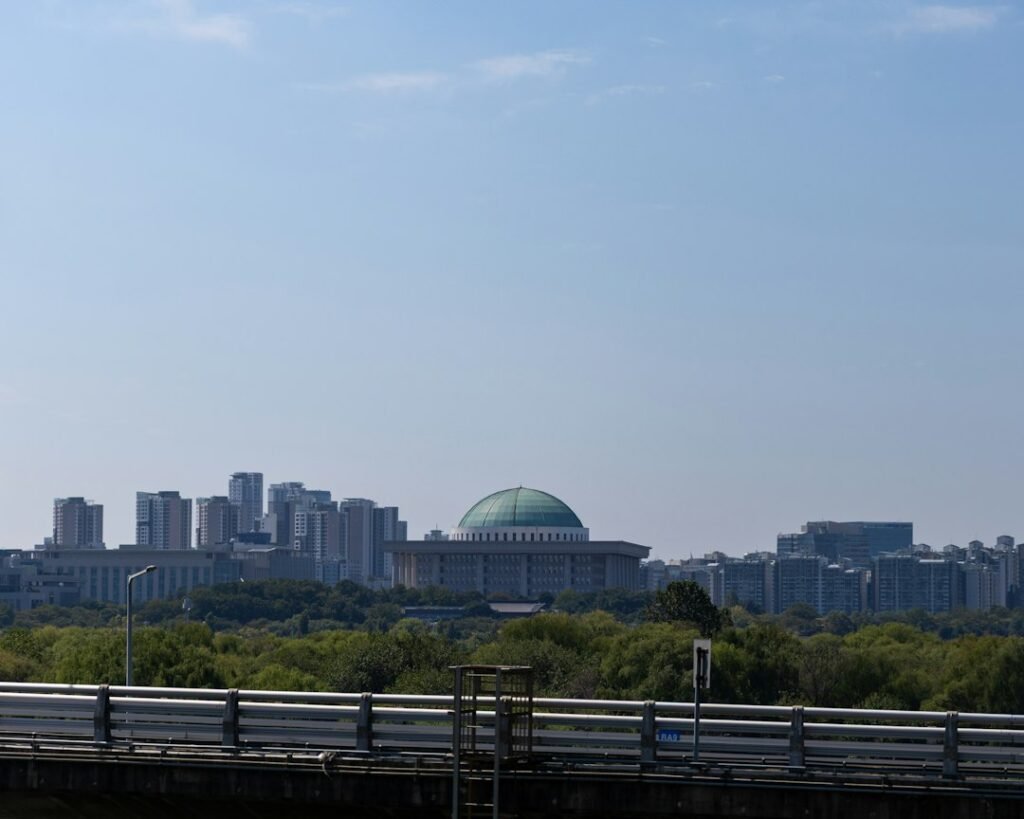
Image: Illustrative photograph of Seoul’s National Assembly building, not a photograph of the November 2 address. Photo by yeojin yun / Unsplash.
Sources and verification
- Reuters, November 2: Lee’s budget speech and investment priorities
- Yonhap News Agency, November 2: parliamentary address and 2027 proposal
- Seoul Economic Daily, November 1: budget-review timetable and competing fiscal priorities
Video note: No exact-event, rights-verified official video was confirmed at publication; no unrelated speech footage has been embedded.


About The Author




