North Korea Calls September Nuclear Drill a Threat, Vows Faster Deterrent Build-Up
· News Team
SEOUL, November 2, 2026 — North Korea said Monday that a recent U.S.–South Korean military exercise underscored its determination to strengthen its nuclear deterrent. The warning was carried by North Korean state media and reported independently by Reuters and South Korea’s Yonhap news agency. It was a political statement, not an announcement of a new nuclear test.
The dates matter
The exercise at the center of the dispute, known as Iron Mace, took place from September 29 to October 2. It was designed to coordinate U.S. nuclear capabilities with South Korea’s conventional forces as part of allied deterrence planning. Pyongyang’s condemnation was issued on November 2, a month after the exercise ended. Describing the drills themselves as newly underway would misrepresent the chronology.
Kim Jong Sik, a senior official of the ruling Workers’ Party involved in the country’s nuclear and missile programs, characterized the exercise as threatening and argued that North Korea should strengthen its nuclear forces more quickly. That is Pyongyang’s account of the drill’s intent; it is not an independently established description of an allied plan to attack.
What is confirmed — and what is not
Both Reuters and Yonhap report the existence and substance of the statement. Neither report establishes that a new nuclear weapon was deployed, that a fresh nuclear test took place on November 2, or that the United States and South Korea announced a change in their exercise schedule in response. Those are separate claims that would require their own evidence.
Analysts cited by Reuters noted that a detailed public statement on nuclear policy from Kim Jong Sik was unusual, potentially reflecting his growing role in weapons policy. That interpretation is analytical rather than an official confirmation of a personnel change.
Why this matters for regional security
The dispute illustrates a persistent deterrence dilemma: Washington and Seoul describe military coordination as defensive, while Pyongyang presents it as justification for expanding its arsenal. Each side’s public signals can increase the perceived cost of restraint even without an immediate change on the ground.
Regional tensions have also been elevated by disputes along the inter-Korean border. South Korean authorities said Monday that they had not confirmed a resumption of North Korean propaganda loudspeaker broadcasts, despite previous threats. Readers should distinguish threats, allegations and verified military activity as the situation develops.
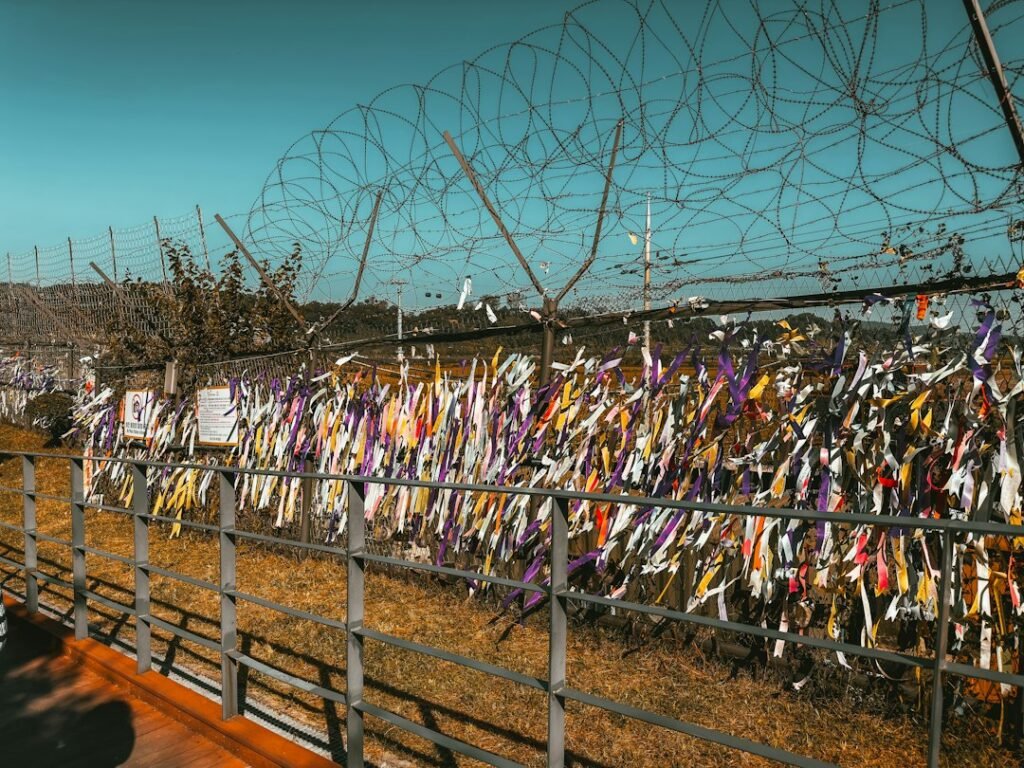
Image: General illustrative photograph of ribbons on a fence; not an image of Iron Mace, the November 2 statement, or military activity. Photo by Christopher Pap de Pestény / Unsplash.
Sources and verification
- Reuters, November 2: North Korean statement and exercise context
- Yonhap News Agency, November 2: statement carried by KCNA and drill dates
Video note: No rights-cleared, exact-event official video of the statement was verified; unrelated archival military footage has not been embedded.


About The Author




