A 4.1-Billion-Year-Old Mars Meteorite Shows Signs of Ancient Water—Not Life
· News Team
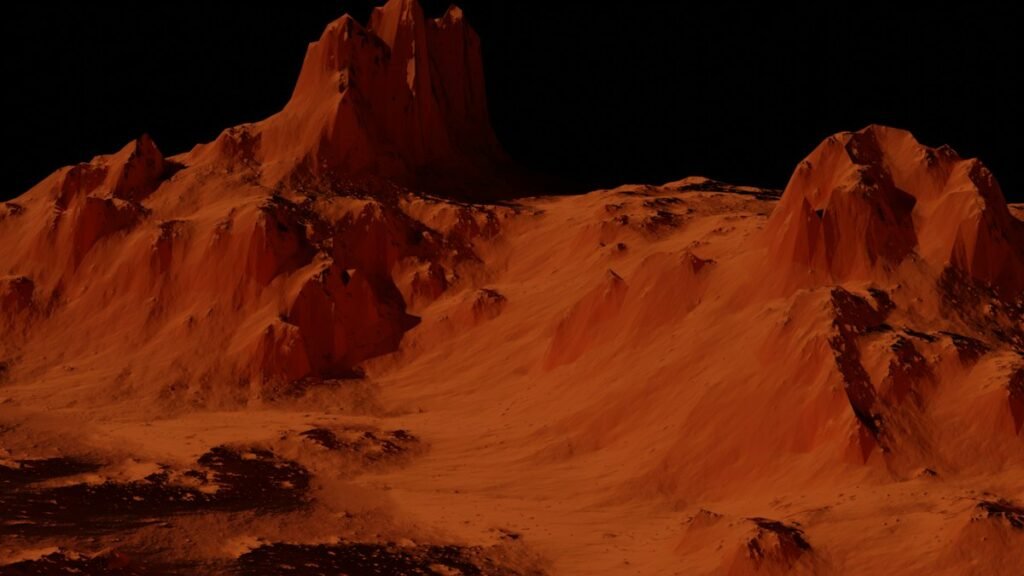
October 30, 2026. A rose-colored meteorite discovered in Mali’s Sahara Desert is giving researchers an unusually direct look at Mars more than 4.1 billion years ago. The rock, named Teghaza 001, contains mineral and isotopic evidence of ancient interactions with water. That is a powerful clue to early Martian geology—but it is not evidence that life existed on the planet.
A rare sample of the earliest Martian crust
Teghaza 001 was found in 2022 and weighs roughly 800 grams. NASA-funded researchers report that its texture, chemistry and minerals differ markedly from most meteorites identified as Martian. Zircon crystals and other dating methods indicate an age of at least 4.1 billion years, placing it among the oldest known pieces of Mars available for study on Earth.
In an October 29 NASA/JPL summary, scientists describe how the rock cooled from magma in the Martian crust before undergoing alteration associated with water. A Reuters report independently summarizes the new research and explains why this sample differs from younger meteorites.
What the water evidence does—and does not—say
Scientists found chemical signatures consistent with fluid-rock interactions. Separate research published in Science Advances in June 2026 examined hydrogen isotope ratios in the meteorite’s phosphate minerals. Those measurements indicate mixing between water associated with Martian magma and a component influenced by the ancient Martian hydrosphere.
That matters because the history of water on Mars is tied to the evolution of its atmosphere and its potential habitability. Evidence that water once moved through the crust strengthens the case for an active early water cycle. But a mineral’s water-related chemistry cannot tell us whether microorganisms ever lived there. Habitability is a scientific possibility, not a detection of life.
Why one meteorite cannot settle Mars’s history
Most meteorites from Mars sample geologically younger material. Teghaza 001 therefore offers a rare window into a period that planetary scientists otherwise reconstruct largely from remote sensing, crater counts and rover observations. The rock may have come from ancient southern highland terrain, but researchers cannot establish its precise point of origin.
One sample also cannot establish that all of Mars was wet at the same time, how long surface water persisted or whether any particular location was habitable. Further laboratory work, comparison with orbital data and eventually carefully documented returned samples will be needed to test broader conclusions.
Featured image: a stylized 3D rendering of Mars by Ezi / Unsplash. It is an illustration, not an image of Teghaza 001 or a reconstruction of the discovery.
Sources
NASA/JPL primary research summary, October 29, 2026 · Saper and colleagues, Science Advances (June 2026) · Reuters science reporting (October 29).
Video: No exact-event official video with independently confirmed embed permission was identified at publication. The NASA/JPL research page is the verified primary-source fallback.


About The Author





Leave a Reply