China’s Clean-Tech Exports Could Avoid 450 Million Tons of CO₂ a Year—But the Figure Is a Forecast
· News Team
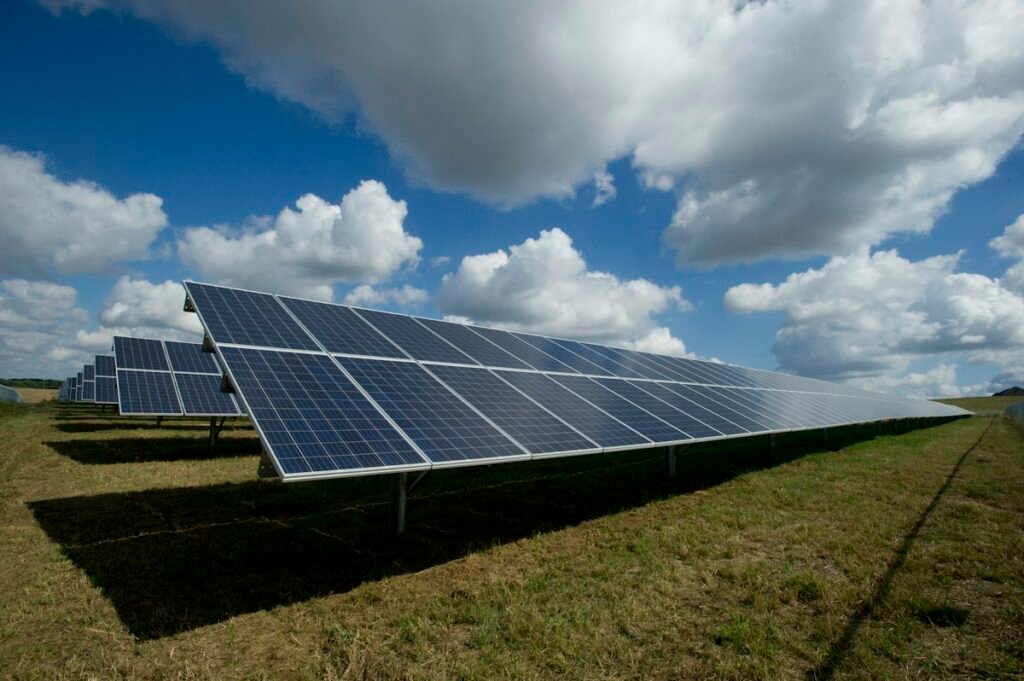
October 29, 2026 — Chinese-made solar panels, wind turbines, batteries and electric vehicles exported in 2026 could help other countries avoid approximately 450 million metric tons of carbon dioxide each year once the equipment is deployed, according to a new analysis by Lauri Myllyvirta of the Centre for Research on Energy and Clean Air (CREA). That is roughly comparable to Brazil’s annual fossil-fuel CO₂ emissions. But the headline number is a modelled estimate, not a measurement of emissions already prevented during 2026.
Featured image: Illustrative solar-panel photograph by American Public Power Association / Unsplash; not a photograph of the reported export shipments.
What the 450-million-ton figure actually means
The analysis, published October 29 by Carbon Brief, uses shipments in the first nine months of the year to project full-year exports. It then estimates how much fossil-fuel electricity and transport fuel those products could displace after installation in importing countries. It also accounts for emissions associated with manufacturing the equipment in China.
CREA estimates the equipment exported in 2026 could avoid about 8.4 billion tons of CO₂ over its operating lifetime. That cumulative estimate should not be confused with the 450-million-ton annual figure, and neither should be interpreted as an independently observed reduction in this year’s global emissions inventory. The model assumes typical operating lifetimes and that clean technology displaces higher-emitting alternatives.
Why the destination matters as much as the factory
Solar panels account for the largest projected emissions benefit. The same panel generally avoids more CO₂ where it replaces coal-heavy electricity than where the existing grid is already relatively clean. Sunlight, local power demand and whether the grid can actually accommodate new generation also influence the outcome.
Although wealthier countries bought a large share of clean technology by value, CREA estimates 76% of lifetime avoided emissions from China’s 2026 exports will occur in the Global South. South and Southeast Asia together account for about 52%, reflecting large solar shipments into grids that still rely heavily on fossil fuels. The study estimates wind and solar equipment shipped in 2026 could produce roughly 800 terawatt-hours of electricity annually after deployment, equivalent to the output of about 100 coal-fired power stations under the study’s assumptions.
Exports are accelerating—but the figures need context
In the first three quarters of 2026, Chinese exports of electric cars and heavy vehicles rose 61% year on year, wind turbines 45%, batteries 39% and solar equipment 22%, according to the analysis. These are growth rates for different categories of exported products, not percentages of global emissions eliminated.
The Associated Press reported October 29 that independent experts considered the scale plausible but could not validate all the underlying data. The analysis relies on assumptions about which power sources are displaced, equipment lifetimes, vehicle usage and manufacturing emissions. A solar panel waiting in a warehouse or installed on a constrained grid does not automatically produce the modelled benefit.
The trade-off for governments and manufacturers
Lower-priced imported equipment can speed up electrification and reduce fossil-fuel dependence, especially for countries exposed to volatile fuel prices. But the expansion also creates strategic questions about supply-chain concentration, domestic manufacturing, tariffs and the ability of local power networks to absorb new capacity.
The study finds that growth in Chinese exports has often coincided with expanding global markets rather than a simple one-for-one replacement of other exporters. Yet lower prices can still squeeze manufacturers whose sales volumes are steady. Governments weighing tariffs against energy-security and climate goals face a genuine policy trade-off, not a choice between unqualified benefits and unqualified costs.
What to watch next
Three tests will determine how much of the forecast becomes reality: whether fourth-quarter shipments sustain the trend; how quickly importing countries install and connect the equipment; and whether it actually displaces fossil-fuel generation and fuel consumption. The analysis offers a substantial estimate of potential climate benefits, but deployment and real-world operation—not export figures alone—will decide the outcome.
Sources and methodology: Lauri Myllyvirta / CREA, original Carbon Brief analysis (October 29, 2026); Associated Press independent reporting (October 29, 2026); Reuters (October 29, 2026). Figures are attributed to the researcher’s model; this article does not independently reproduce the underlying calculations.


About The Author





Leave a Reply