UK Budget 2026 Offers £100 Energy Relief—But a £15 Billion Fiscal Buffer Shows the Trade-Off
· News Team
Updated October 29, 2026. Britain’s new budget promises short-term help with energy costs while exposing a longer-term problem: the government has less room to absorb another economic shock. Chancellor John Healey’s October 28 statement offers a £100 household payment for eligible homes in England, extends electricity tax relief and temporarily raises a tax surcharge on banks. Yet official forecasts point to weaker growth next year and a relatively narrow buffer against the government’s fiscal rules.
Who gets the £100 payment—and when?
The official Budget 2026 document says households in Council Tax bands A–D in England are eligible for a £100 Household Energy Payment from January 2027. The government expects up to 20 million English households to benefit, with payments delivered through local authorities and the Council Tax system. Funding will also flow to devolved administrations, but that does not mean the identical English eligibility rules automatically apply throughout Scotland, Wales and Northern Ireland.
Importantly, this is a one-off payment, not a £100 reduction in every monthly bill. Households outside bands A–D may not qualify for the main English scheme; a separate £100 million allocation is intended to help local authorities target some other households facing acute energy pressure. Readers should check the eventual council guidance rather than assume payment is immediate.
Energy tax relief continues, but bigger changes are still ahead
The government is extending the temporary reduction in VAT on domestic electricity until July 2027. Its Budget estimates that this extension could take around £50 off the annual Ofgem price cap in April 2027; that is a forecast, not a guarantee for every household. Ministers have also asked regulator Ofgem to abolish domestic gas standing charges by the end of 2027 or as soon as practicable afterwards. The standing-charge change has not yet taken effect, and shifting fixed costs into unit prices could affect households differently depending on consumption.
For an overview of the eligibility and timing, see the Department for Energy Security and Net Zero’s household explainer.
Why banks are being asked to pay more
To help fund energy support, the Bank Corporation Tax Surcharge is scheduled to rise from 3% to 6% for the period January 1, 2027, through March 31, 2028, subject to the Finance Bill. The increase is temporary by design. The immediate fiscal logic is straightforward: raise a time-limited tax on bank profits to offset part of the cost of temporary household relief. Whether lenders respond by changing prices or investment is uncertain and cannot be inferred from the announcement alone.
The less visible number: £15 billion
The Office for Budget Responsibility’s forecasts, summarized in the Treasury’s Budget, put the government’s headroom against its stability rule at £15 billion in 2029–30, rising to £22 billion in 2030–31. This is forecast fiscal headroom—not cash set aside in an account. It measures how much the outlook could deteriorate before the rule is missed. The government attributes much of the reduced margin to higher debt-interest costs associated with the Middle East conflict.
The official outlook forecasts UK growth of 1.2% in 2026 and 1.0% in 2027. These are projections, not recorded outcomes. Associated Press reporting notes that economists question how much the short-term relief will change Britain’s weak longer-term living-standards outlook. The Budget also proposes a 3.9% increase in minimum and living wage rates, while leaving difficult questions about future spending and inflation unresolved.
What households and businesses should watch next
Three practical tests will determine whether the Budget delivers: whether eligible households receive support smoothly in January; whether energy bills stabilize after the temporary tax measures expire; and whether growth and borrowing follow the OBR’s forecasts closely enough to preserve fiscal headroom. For banks and businesses, the final Finance Bill and any subsequent guidance matter more than the headline announcement.
The UK Parliament’s official Budget statement page identifies the October 28 debate and links to the parliamentary broadcast archive. We have not verified a specific embeddable, exact-event YouTube recording, so no third-party footage is embedded or rehosted here.
Sources and verification: HM Treasury, Budget 2026 (October 28); UK energy department, household guidance (October 28); Reuters, October 28 budget report; Associated Press, October 28; UK Parliament, broadcast information.
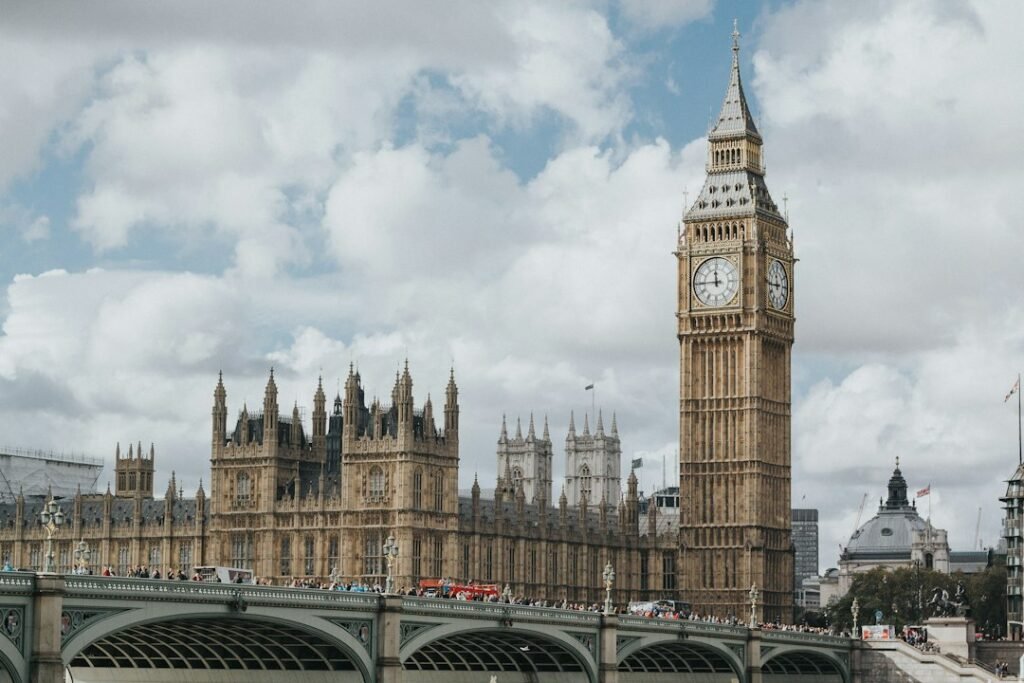
Featured photograph: Marcin Nowak / Unsplash. Illustrative view of Westminster; not a photograph of the October 28 Budget speech.


About The Author




