Equinor’s $12.35 Billion Energy Windfall: Why Net Profit Tells a Different Story
· News Team
October 28, 2026. Norway’s Equinor has reported a sharp earnings jump as oil and European gas prices rose amid disrupted global energy markets. But the headline figure is not the same as the money ultimately left to shareholders — and that distinction matters when assessing how durable the windfall could be.
What Equinor actually earned
Equinor reported $12.35 billion in adjusted operating income for the third quarter, roughly twice the $6.2 billion reported a year earlier. That is a measure of operating performance adjusted for certain items, not net profit. The company’s reported net income was $2.54 billion, while adjusted net income was $2.86 billion. Its reported net operating income was $11.95 billion, up from $5.27 billion a year earlier. Conflating those figures would exaggerate the amount available to shareholders.
The company said its realized liquids price averaged $92.30 a barrel and its realized European gas price was $20 per million British thermal units. Higher prices, strong refining margins and trading results were central to the quarter. Reuters independently reported that the adjusted operating result exceeded analysts’ expectations of about $12.19 billion.
Higher output helped — but prices did more of the work
Total equity production reached approximately 2.166 million barrels of oil equivalent per day, 2% higher year on year. Equinor raised its 2026 production-growth outlook from around 3% to around 4%. This is a forward-looking target, not additional production already delivered.
Those volumes matter, but the scale of the earnings increase relative to 2% production growth points to a much larger role for commodity prices, refining and trading. The company reported $8.14 billion in operating cash flow after taxes paid, illustrating that cash generation and accounting earnings should also be examined separately.
Why this matters beyond Norway
Europe depends on reliable oil and gas supplies while navigating volatile prices. Equinor’s position as a major supplier gives it exposure to that demand, but high producer earnings can coexist with pressure on energy users. An energy-price surge is not an unqualified economic benefit: consumers and energy-intensive industries can face higher costs even as producers enjoy stronger margins.
The company also reported a 26% rise in renewable electricity generation, supported by Dogger Bank and a Brazilian onshore asset. That percentage should not be confused with a similar shift in the composition of Equinor’s overall earnings: hydrocarbons remain central to this quarter’s results.
The test ahead
Equinor maintained a quarterly dividend of $0.39 per share and outlined up to $3 billion in buybacks for 2026. The bigger question is whether cash flow and production improvements will hold if oil and gas prices retreat or trading margins normalize. Investors should distinguish management’s production guidance and proposed capital distributions from guaranteed future outcomes.
Official company webcast: Equinor lists its October 28 Q3 results presentation and webcast on its investor relations page. This is a verified official fallback link, not an embedded or playback-tested video.
Sources: Equinor’s official Q3 2026 release, October 28; Reuters independent earnings report, October 28. Figures are presented as reported at publication time.
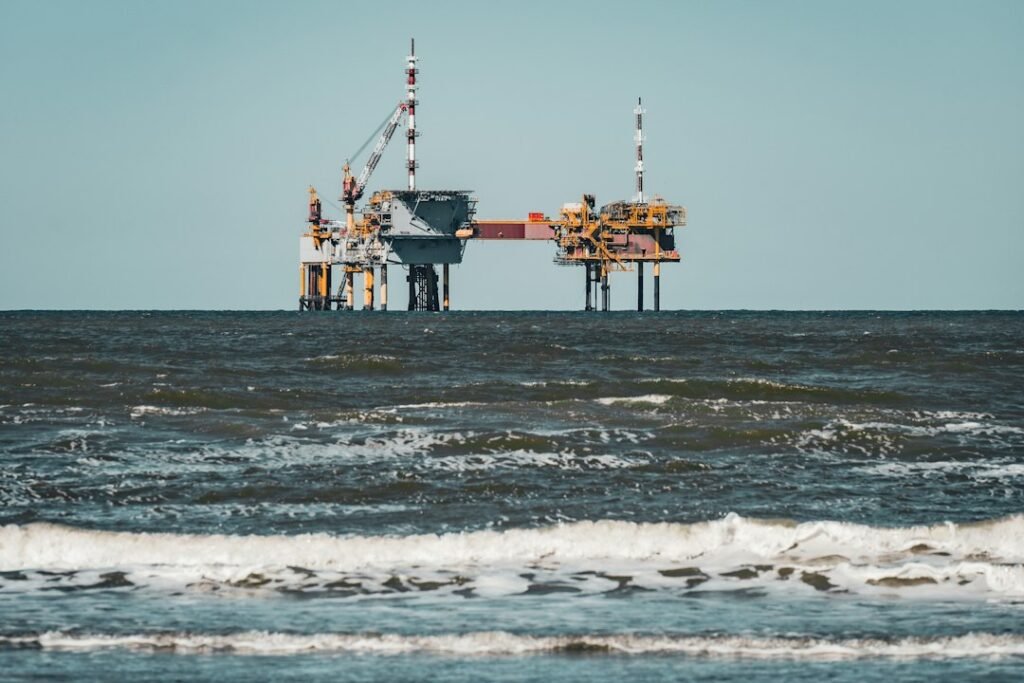
Featured image: illustrative offshore platform photograph by Julia Taubitz / Unsplash. It does not depict a confirmed Equinor facility.


About The Author





Leave a Reply