The 5 Worst Foods That Feed Cancer (Stop Eating These)
The 5 Worst Foods That Feed Cancer (Stop Eating These)
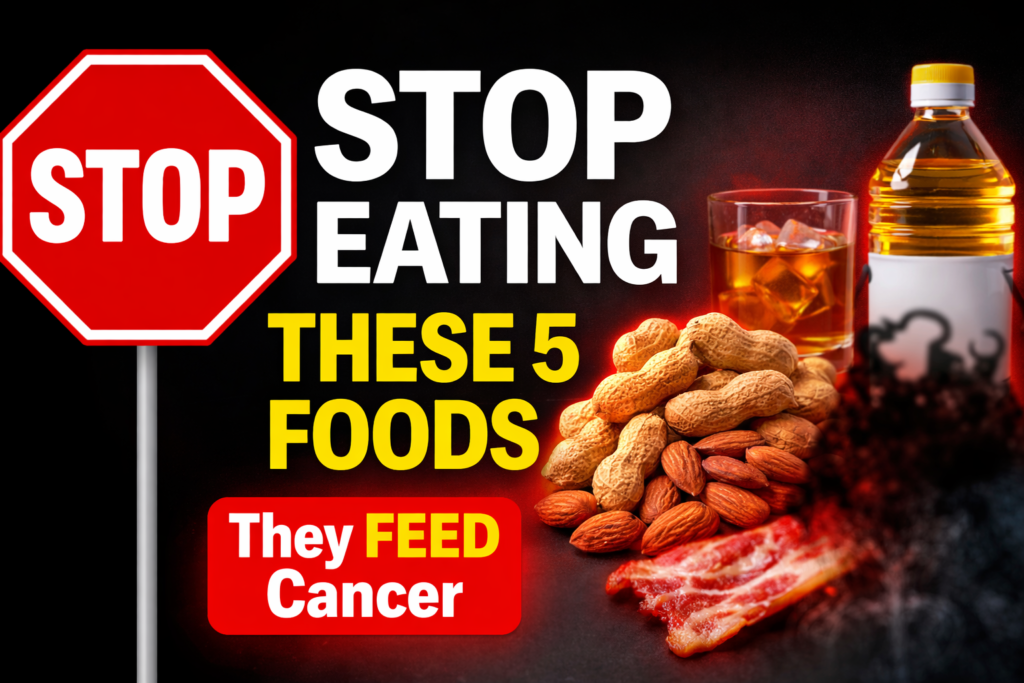
Food number one: the silent carcinogen.
There’s a silent assassin hiding in your pantry. We’re talking about aflatoxins. This isn’t the green fuzz you see on old bread. This is invisible to the naked eye, and it loves to colonize crops stored in warm, humid environments.
The biggest culprits are peanuts, corn, and tree nuts like pistachios. This is not fear-mongering—this is classified as a Group 1 carcinogen. The liver is the primary filter for everything that enters your body. When you ingest aflatoxins, your liver tries to break them down. And in the process, the toxin damages the DNA of the liver cells themselves.
It’s like trying to grab a red-hot coal to throw it away—you burn your hand in the process. Repeated exposure creates a chronic wound in the liver’s DNA. Researchers studying populations in humid regions of Asia and Africa found a direct, undeniable link between dietary aflatoxin exposure and liver cancer.
So how do you avoid this? You don’t have to ban nuts. Nuts are incredibly healthy—but you must be the gatekeeper.
-
Check the source. Avoid bulk-bin nuts where humidity control is questionable.
-
Use the freshness test. If a nut looks shriveled, discolored, or tastes stale, spit it out. That taste is often the chemical signature of spoilage.
-
Don’t rely only on peanut butter. Rotate with almond or cashew butter from high-quality brands that test for mold.
Food number two: the sugar trap.
We have to start with the fuel source. To understand why certain foods are dangerous, you have to understand how a cancer cell eats. It doesn’t eat like a normal cell.
A healthy cell is efficient—it’s like a hybrid car. It uses oxygen and fuel to create a massive amount of energy with very little waste. But a cancer cell? It’s a gas guzzler. It’s inefficient. It rejects oxygen even when it’s available and instead ferments sugar. This is known as the Warburg effect.
And that’s where the first major dietary offender comes in: refined sugars and high-glycemic carbs.
When you consume high amounts of refined sugar—think soda, pastries, or even white bread that dissolves instantly on your tongue—you create a tidal wave of glucose in your blood. For a normal cell, this is too much. But for a cancer cell, it’s a buffet.
These cells have been observed to have significantly more insulin receptors than healthy tissue. They’re literally built to grab sugar out of your bloodstream faster than anything else.
But sugar is only half the problem. The real danger is the messenger you send out to deal with the sugar: insulin.
Imagine your bloodstream is a garden hose. When you eat a bagel or a bowl of sugary cereal, sugar floods the water. Your pancreas panics and pumps out insulin to clear it. Insulin is a storage hormone—but it’s also a growth signal. It screams at your cells: “Grow. Divide. Store energy.”
In a healthy body, this signal is quiet and controlled. In a body constantly flooded with sugar, the signal gets jammed. The cells stop listening. This is insulin resistance—it’s like kinking that garden hose.
The insulin builds up pressure behind the kink. Your body thinks the message isn’t getting through, so it pumps out even more insulin. Now you have a dangerous cocktail: high sugar (fuel for the cancer) and high insulin (the command to grow).
You’ve given the enemy both the gas and the green light. This is why researchers have found strong correlations between hyperinsulinemia—high insulin levels—and cancers of the breast and colon. You’re effectively keeping your body in a permanent state of construction, never allowing it to rest, repair, or clean up.
Food number three: processed meats.
Now let’s move to the deli counter. There’s a massive difference between a steak from a cow and a slice of bologna. They might both be “meat,” but biochemically they are worlds apart.
The issue with processed meats—bacon, sausages, hot dogs, deli ham—isn’t just the fat or the salt. It’s the preservation method.
To keep meat pink and fresh-looking for weeks on a shelf, manufacturers add nitrates and nitrites. On their own, these compounds are relatively stable. But when you eat them, something happens in your gut.
The chemical environment of your stomach, combined with the proteins in the meat, converts these nitrates into nitrosamines. Think of nitrosamines like a Trojan horse. They enter the body disguised as food—but once they interact with your delicate gut lining, they release chaos.
They are potent mutagens. They directly damage the cells of the colon. A landmark report by international cancer researchers analyzed over 800 studies and concluded that eating just 50 grams of processed meat daily—less than two slices of bacon—could increase the risk of colorectal cancer by 18%.
But there’s another layer: the cooking method.
When you take processed meat—or even fresh red meat—and char it on a grill until it’s black, you create another set of toxins called heterocyclic amines.
Imagine you’re trying to read a blueprint to build a house, but someone spills black ink all over the page. You can’t read the instructions anymore—so you build a wall in the wrong place. That’s what these chemicals do to your DNA. They cause reading errors during cell replication.
If you’re going to eat meat, the strategy is simple:
-
Swap processed meat for fresh cuts.
-
Don’t burn it to a crisp.
-
Marinate it. Interestingly, marinating meat with herbs like rosemary and thyme before cooking can create a protective barrier that significantly reduces the formation of these harmful char chemicals.
Food number four: the inflammatory oil spill — processed fats.
Your cells are wrapped in a membrane. This membrane determines what gets in and what gets out. It needs to be flexible and intelligent. And it’s built from the fats you eat.
If you build a house with cheap, crumbling bricks, the walls will fail. If you build your cell membranes with processed vegetable oils—high omega-6s—the cell’s integrity fails.
We’re talking about soybean oil, corn oil, cottonseed oil, and sunflower oil. These are industrial fats. The problem isn’t fat itself—it’s instability.
These oils are highly reactive to oxygen. When you consume them—especially after they’ve been heated in a deep fryer—they set off a chain reaction of oxidation inside your body.
Think of oxidation like rust on a car. It’s a slow, corrosive process. This biological rust triggers your immune system. Your body senses damage and sends out an inflammatory response.
Acute inflammation is good—it heals a cut. Chronic inflammation is a disaster. It’s like having a SWAT team permanently stationed in your living room, shooting at shadows. This constant state of alert damages nearby healthy tissue.
Historically, our ancestors ate an omega-6 to omega-3 ratio of about 1:1. Today, in the modern diet, that ratio is closer to 20:1. We are drowning in inflammatory signals. And chronic inflammation is the soil in which cancer seeds grow.
It creates a chaotic environment where cells are constantly being repaired, divided, and stressed.
The fix is simple: change the oil.
Olive oil and avocado oil are your allies. They’re stable. They contain polyphenols that actually soothe inflammation. Omega-3s from fatty fish like salmon or sardines are the fire extinguishers. They actively resolve inflammation and tell the immune system to stand down.
Food number five: alcohol.
This is the one people defend the most—but the biochemistry is undeniable. When you drink alcohol, your body doesn’t just process it. It survives it.
Alcohol—ethanol—is converted in the liver into acetaldehyde. This is not a harmless byproduct. Acetaldehyde is toxic. It acts like a solvent.
Imagine you have a security guard protecting your DNA. Acetaldehyde knocks that security guard unconscious. It interferes with your body’s ability to repair broken DNA strands.
We all have DNA breaks every day—from the sun, from stress, from random errors. Usually, repair crews fix them. Alcohol sends the repair crews home.
And there’s more: alcohol also acts as a solvent for other toxins. It damages the lining of the mouth and throat, making those tissues more permeable. It effectively unlocks the door and holds it open for other carcinogens to walk right in.
That’s why we see a dose-dependent relationship: the more you drink, the higher the risk—particularly for cancers of the esophagus, liver, and breast. In women, alcohol can also artificially spike estrogen levels, adding fuel to hormone-sensitive cancers.
If you’re serious about cancer prevention, looking at your alcohol intake is the lowest-hanging fruit. It’s the easiest lever to pull to immediately lower your toxic load.
Now: how to starve the enemy.
So we’ve identified the enemy supply lines—glucose spikes, insulin growth signals, inflammatory oils, and chemical mutagens. Now how do we go on the offensive?
We need to activate a process called autophagy—a concept popularized by Nobel Prize–winning research. Autophagy literally means “self-eating.” It sounds gross, but it’s beautiful. It’s your body’s internal recycling program.
When you’re constantly eating—grazing from morning until midnight—your body is in growth mode. It’s building new cells, new proteins, and storing fat. It never cleans up the mess.
But when you stop eating for a period of time—what we call intermittent fasting—you flip a switch. The body realizes no new energy is coming in. It says, “Okay. We need to be efficient. Look around for any broken, old, or mutated machinery—and melt it down for energy.”
Autophagy is the cleanup crew. It finds junk proteins and precancerous cells that aren’t functioning correctly, and it recycles them. It cleans the house.
You cannot trigger autophagy if your insulin is high. You can’t trigger it if you’re snacking on sugar every two hours.
So here’s the ultimate strategy, combining the wisdom of metabolic health researchers:
-
Compress your eating window. Give your body 12, 14, or 16 hours of rest every day. Let insulin drop. Let the janitorial staff come in and do their work.
-
Prioritize fiber. Fiber is the antidote to the Western diet. It acts like a physical barrier in your gut. It slows sugar absorption, flattening the glucose spike. It binds to toxins and escorts them out. It feeds the good bacteria that fight inflammation.
-
Starve the cancer, feed the human. Cancer cells are inflexible—they need sugar. Healthy cells are flexible—they can run on fat and ketones. By lowering your carbohydrate intake and focusing on healthy fats and proteins, you metabolically isolate cancer cells. You change the terrain.
The power is in your hands.
We often feel helpless when we hear the word “cancer.” It feels like a lightning strike. But science shows we’re more like gardeners. We can’t control the weather—and we can’t control every single seed that lands in our soil.
But we can control the soil itself.
We can choose not to water the weeds with sugar and insulin. We can choose not to poison the ground with processed nitrates and inflammatory oils. We can give the soil a rest through fasting so it can recover.
Every meal is a signal. You’re either signaling health, repair, and stability—or you’re signaling chaos, growth, and inflammation.
The choice happens three times a day.
Start simple. Check your nuts for freshness. Swap processed deli meat for a real piece of chicken. Stop eating three hours before bed. These aren’t just diet tips. They’re tactical maneuvers in the defense of your own life.
If you found this breakdown helpful, hit that like button so this information can spread to more people who need to hear it.
About The Author