Aliyev Skips Ankara Summit as Turkey–Azerbaijan Frictions Surface — Is the Alliance at Risk?
· News Team
ANKARA, October 30, 2026 — Azerbaijani President Ilham Aliyev did not attend Friday’s 13th summit of the Organization of Turkic States in Ankara, even though Turkish President Recep Tayyip Erdoğan had personally invited him. Azerbaijan sent Foreign Minister Jeyhun Bayramov instead. The absence is a visible diplomatic signal, but it does not establish that the two close allies have broken ties.
What is confirmed about the summit?
Turkey hosted the gathering on October 30, and Bayramov appeared in the summit’s official group photograph alongside the participating leaders. Erdoğan publicly emphasized unity among Turkic countries. The state-run Anadolu Agency’s same-day summit report independently documents the foreign minister’s presence, while its account of Erdoğan’s address records his call for cooperation.
Reuters reported that Azerbaijani media attributed Aliyev’s absence to previously scheduled engagements. At the time of that report, there was no official Azerbaijani explanation establishing that he deliberately boycotted the event. The distinction matters: a missed meeting can intensify speculation without proving a formal diplomatic rupture.
Why have relations become tense?
Disagreement over Azerbaijan’s new school-uniform rules and restrictions on headscarves has triggered criticism from Turkish political figures and a sharp response from Baku, which objects to outside interference in domestic affairs. Reuters reports that Azerbaijan declared 31 Turkish nationals persona non grata over social-media criticism. Erdoğan removed an adviser who had publicly attacked the Azerbaijani policy, an apparent effort to contain the fallout.
These immediate tensions sit alongside longer-running differences. Ankara has strongly criticized Israel’s military campaign in Gaza, while Baku maintains close ties with Israel. Turkey is also seeking progress in normalizing relations with Armenia, a process bound up with Azerbaijan–Armenia diplomacy. Both Associated Press and Reuters identify those policy differences as important context, rather than proof that bilateral cooperation has ended.
Why this matters beyond a summit photograph
Turkey and Azerbaijan have built substantial defense, energy and transport links. Turkey buys Azerbaijani natural gas, and the countries have long described their relationship as exceptionally close. A sustained deterioration could complicate regional diplomacy in the South Caucasus, where Ankara, Baku, Yerevan and Moscow have overlapping interests. That is a potential consequence, not an outcome already demonstrated by Friday’s attendance list.
For now, the more informative indicators will be whether senior officials continue direct talks, whether the school-uniform dispute de-escalates, and whether the two governments sustain their existing energy and security cooperation. A single missed summit cannot answer those questions.
Video and source verification
Verified event coverage: Watch the October 30 summit speech through Anadolu Agency (Turkish). This is a link to the reporting outlet’s event-specific player, not a copied video or a claim that Tectonics has tested third-party iframe playback.
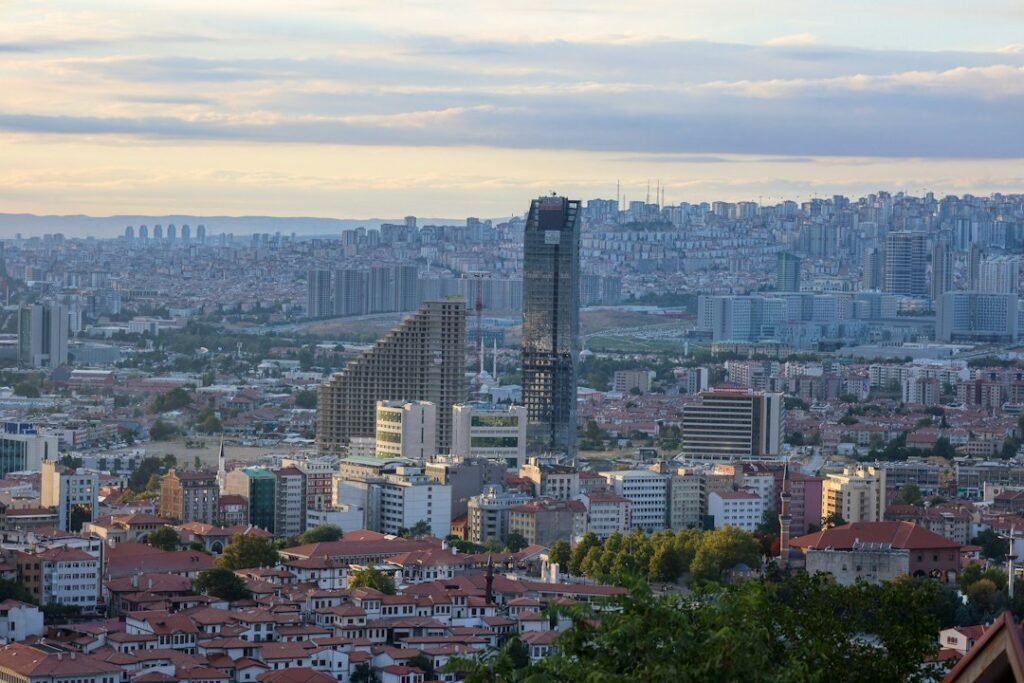
Featured image: General view of Ankara, photographed in 2023 by Felix Munyika / Unsplash. Illustrative only; it does not depict the October 30 summit.
Reporting basis: Reuters, October 30, 2026; Associated Press, October 30, 2026; and Anadolu Agency, October 30, 2026.


About The Author




