Scientists Map 25.5 Million Brain Cells—Why the Breakthrough Is a Research Tool, Not a Cure
· News Team
November 12, 2026 — An international neuroscience consortium has released an unusually detailed cellular map of the basal ganglia, a network deep in the brain involved in movement, motivation, habits and decision-making. The advance is a research reference, not a new treatment or a clinical diagnostic test.
What scientists actually mapped
The BRAIN Initiative Cell Atlas Network (BICAN) coordinated researchers across more than 50 institutions in nine countries. According to the Allen Institute’s November 12 announcement, the project profiled about 25.5 million cells across humans and nonhuman primates: roughly 21 million human cells, three million macaque cells and 1.5 million marmoset cells. The broader comparative atlas also incorporates mouse data. The findings appear in a package of 26 Cell Press studies.
Rather than treating the basal ganglia as a uniform structure, researchers classified different cell populations and examined which genes they express, how their activity is regulated and where cells occur. A standardized naming system lets laboratories compare results across species instead of relying on incompatible labels.
Why this matters for disease research
Conditions including Parkinson’s and Huntington’s diseases, schizophrenia, bipolar disorder and addiction involve circuits or molecular pathways associated with the basal ganglia. The atlas offers researchers a way to ask which specific cell types carry genetic risk signals and how those signals may affect circuits. Some analyses point to previously poorly characterized cell populations and disease-associated patterns. Those associations do not, by themselves, establish that a cell type causes a disorder.
The distinction is important. Much of the human material comes from donated postmortem tissue, and molecular maps cannot directly show how a treatment would work in a living patient. Findings from mice and primates require additional validation before being generalized to people. Any proposed cell-targeted therapy must undergo separate functional, safety and clinical testing.
The next test: turning a map into explanations
The near-term payoff is scientific infrastructure: a shared reference for comparing experiments, identifying plausible disease mechanisms and designing better follow-up studies. Researchers will still need to establish which cell differences are causal, which reflect illness or aging and which are normal variation. That is a far narrower — and more credible — claim than saying the atlas has produced a cure.
Sources and research context
Allen Institute announcement, November 12, 2026; BRAIN Initiative Cell Atlas Network project and data catalog; Reuters independent report, November 12, 2026; BICAN multispecies atlas preprint (April 2026; distinguish from November peer-reviewed collection).
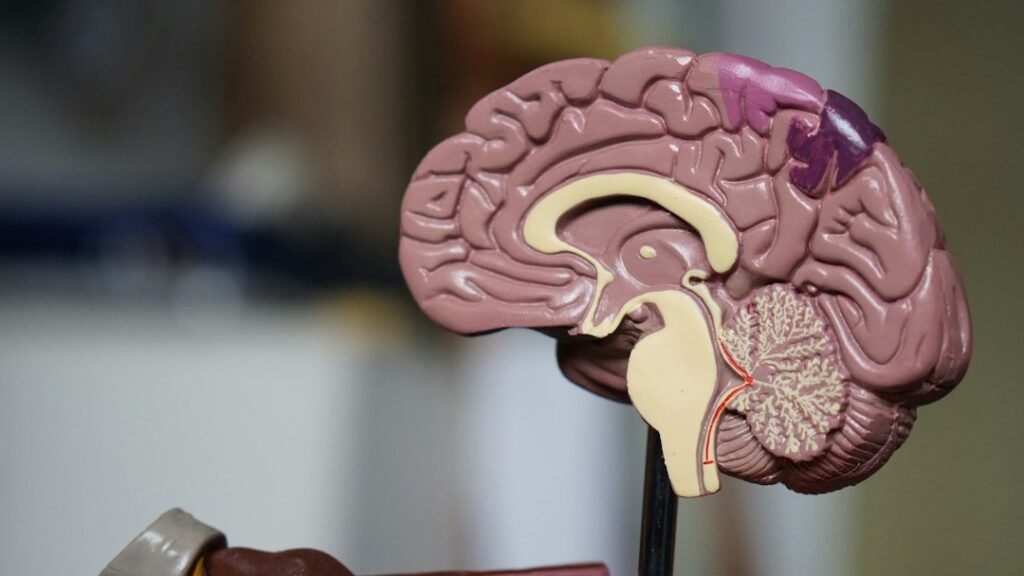
Featured image: Illustrative anatomical brain model, photograph by Robina Weermeijer / Unsplash. Not an image from the BICAN study.


About The Author





Leave a Reply