California Ballot Fight Escalates as Newsom Warns Judges Against Election-Period Seizures
· News Team
California’s escalating election-law dispute has moved from voter-roll challenges to a warning about the possible physical seizure of election materials. On October 31, Governor Gavin Newsom sent a letter to chief federal district judges in the state, urging care if investigators seek warrants for ballots or election equipment before results are certified. His letter explicitly said he was unaware of any such warrant application then pending. A warning about a possible action is not evidence that the action has occurred.
What changed ahead of the November 3 vote?
In a letter published October 31, Newsom argued that taking ballots or equipment during counting could disrupt a state’s ability to complete an election. The letter followed a series of federal demands and court disputes over a list of roughly 20,000 registered Californians whom the U.S. Justice Department describes as likely noncitizens. California officials contest the reliability of that list.
The administration’s position is that federal law prohibits noncitizens from voting in federal elections and that potentially ineligible ballots should be identified before counting. The Justice Department’s October 15 statement described its findings as preliminary and said its review remained ongoing. An allegation that a voter may be ineligible does not, by itself, establish that the person is a noncitizen or that an unlawful vote was cast.
Two court decisions shape the immediate situation
According to Associated Press reporting, a federal appeals court rejected a request to require California to separate the disputed ballots, citing practical disruption and the danger of excluding eligible voters. A dissenting judge argued that federal enforcement of voter-eligibility rules justified stronger safeguards. Separately, a federal judge issued a temporary order limiting threats or coercion directed at election officials, a ruling also described in Washington Post reporting. The temporary order is scheduled to last until November 16, subject to further court action.
These are interim judicial decisions, not a final determination that every person on the disputed list is eligible or that the government’s entire investigation is unlawful. They do, however, restrict some of the government’s immediate options while ballots are being processed.
Why it matters
The practical question is whether federal investigators can pursue suspected ineligible registration without interrupting lawful voting and counting. California says existing chain-of-custody and record-retention safeguards preserve potential evidence. Federal officials argue that waiting until after the election could allow ineligible ballots into the count. Both concerns are now being tested in court against the risks of changing election procedures days before voting ends.
What to watch: further appellate filings, any new orders addressing ballot access or election-worker conduct, and whether the Justice Department actually seeks warrants for physical election materials. As of the October 31 governor’s letter, no such pending warrant application was identified by the governor. California’s general election is scheduled for November 3.
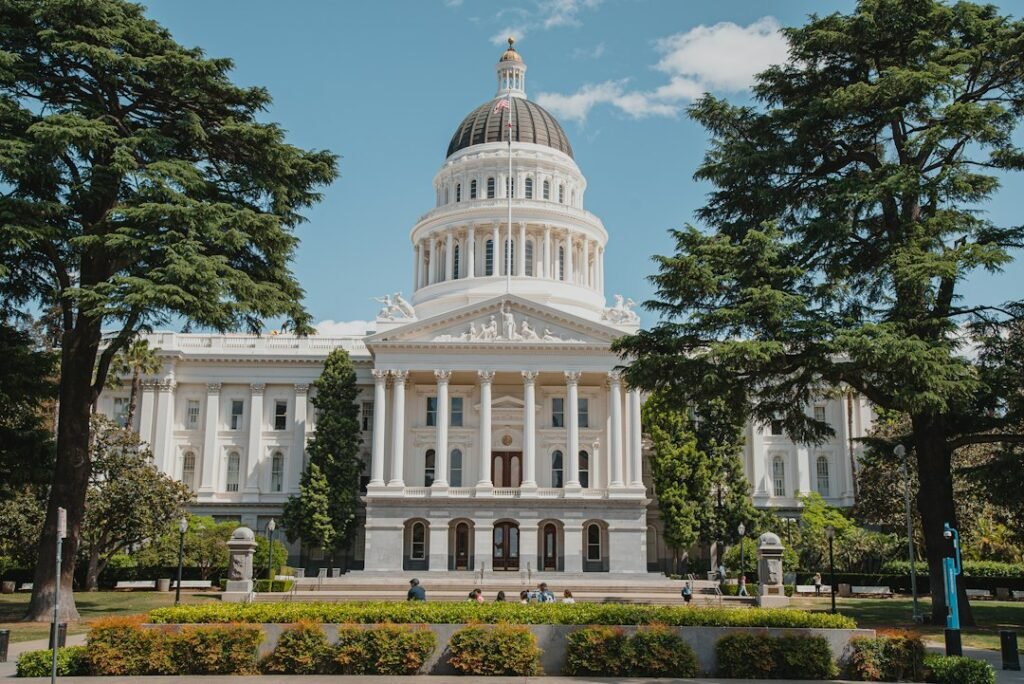
Featured image: California State Capitol, illustrative stock photograph by Josh Hild / Unsplash; not a photograph of the court proceedings. No event-specific authorized video was independently verified for embedding.
Reporting cutoff: November 1, 2026, 00:55 UTC. Sources: California Governor’s Office, U.S. Department of Justice, Associated Press and The Washington Post.


About The Author





Leave a Reply