Amazon’s AWS Sales Jump 39% — So Why Did Free Cash Flow Turn Negative?
· News Team
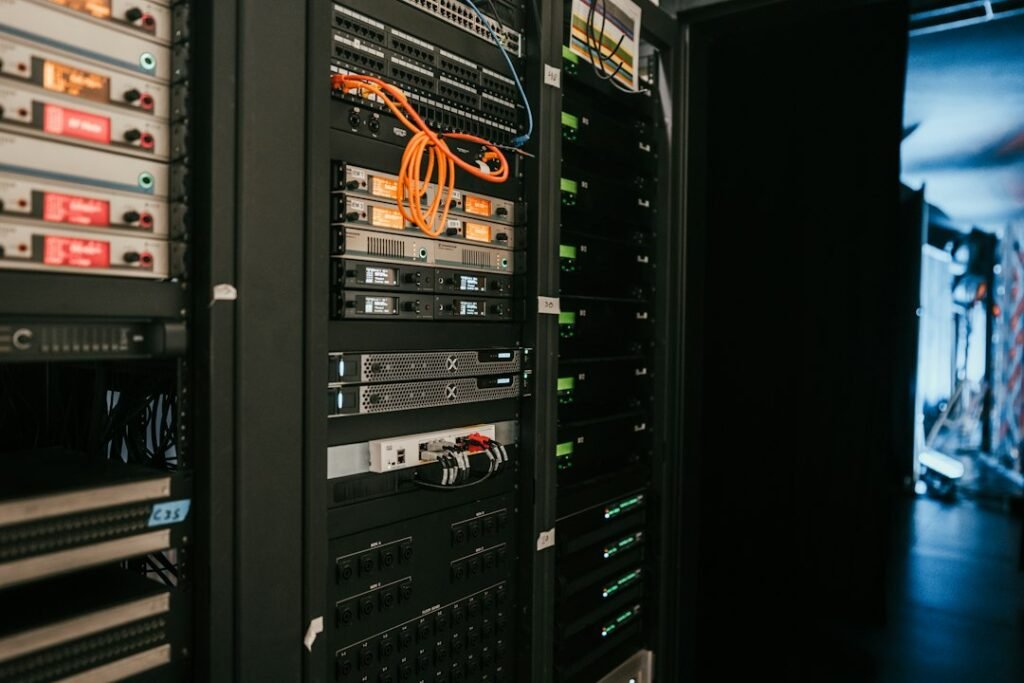
October 30, 2026 — Amazon’s third-quarter results present a striking contrast. Its cloud division is growing rapidly, operating profit has reached a company record, and yet its trailing-year free cash flow has turned deeply negative. The tension is not an accounting contradiction: it reflects the different clocks on which earnings and infrastructure investment operate.
In its October 29 earnings release, Amazon reported third-quarter net sales of $201.9 billion, up 12% from a year earlier, and operating income of $28.1 billion. Its operating margin reached 13.9%, which the company called a record. Those figures describe business performance in the three months ended September 30, not the full year.
AWS growth is real — but so is the investment bill
Amazon Web Services recorded about $46.0 billion in quarterly sales, a 39% year-over-year increase. AWS operating income rose to approximately $17.8 billion from $11.4 billion a year earlier. The cloud unit’s scale gives Amazon a major source of profit while demand for AI computing expands.
But high demand does not eliminate the need to build the capacity that serves it. New data centers require land, power connections, networking, servers and cooling systems before customers can fully use them. Some of those expenditures precede the revenue they may eventually generate, making near-term cash flow a poor stand-alone measure of whether an individual AI project will succeed.
What the negative $42.4 billion actually measures
Amazon reported negative $42.4 billion in free cash flow for the trailing 12 months, compared with positive $14.8 billion in the comparable prior-year period. This is a 12-month measure, not a $42.4 billion loss during the third quarter. Over that same trailing period, operating cash flow grew 29% to $168.3 billion.
The company attributed the free-cash-flow reversal primarily to a $94.8 billion year-over-year increase in purchases of property and equipment, net of proceeds from sales and incentives, reflecting investment in artificial intelligence. That $94.8 billion is the increase in the specified investment measure, not the quarter’s total capital expenditure. Mixing those figures would exaggerate what the earnings release actually says.
Free cash flow matters because it shows how much cash remains after capital spending. Operating profit, by contrast, is calculated under accrual accounting and includes expenses recognized over time. A company can therefore report strong operating earnings while consuming cash to build long-lived assets. Neither number alone settles whether those assets will earn adequate returns.
Why investors may remain unconvinced
Axios reported on October 29 that Amazon shares declined in after-hours trading as investors weighed the investment burden. The report also cited an AWS backlog of $578 billion, up from $496 billion at the end of the previous quarter. Backlog can indicate contracted demand, but it is not the same as recognized revenue or cash collected, and it does not guarantee a particular investment return.
There is a second comparison trap in net profit. Amazon’s net income was $20.7 billion, down from $21.2 billion a year earlier. The company said the comparison was affected by a $9.5 billion pre-tax gain related to its Anthropic investment in the prior-year quarter. That makes the net-income decline a less direct signal of deterioration in core operations than it might appear at first glance.
The questions that matter next
Investors should watch whether AWS revenue growth persists as new capacity becomes available, whether utilization improves, and whether the additional operating profit ultimately offsets the cost of building and maintaining infrastructure. The core question is not whether Amazon can spend heavily on AI — it plainly can — but whether that spending generates durable cash returns after deployment.
Featured image: General server-room photograph by Kevin Ache / Unsplash. Illustrative only; not an Amazon or AWS facility.
Sources: Amazon third-quarter 2026 earnings release, October 29; Axios analysis, October 29.
Get the context: Join the free Tectonics newsletter for original, sourced analysis.


About The Author





Leave a Reply